From Drones to Code: Women in STEM High School Students Explore Career Pathways
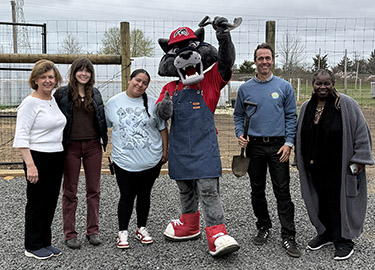
For a group of 25 Longwood High School students, a series of visits to Stony Brook University offered a view of where an interest in science could lead.
Stony Brook University and Stony Brook Medicine are deeply connected to the communities we serve. Drawing on the expertise of our faculty, staff, students and medical professionals, we provide services, programs and educational initiatives that promote health, safety and quality of life across Long Island and beyond.
Our partnerships bring the university and medicine into communities in meaningful ways — from pediatric and adult injury prevention programs and health screenings to educational initiatives, cultural connections and collaborations with local nonprofits. Together with our community partners, we are creating opportunities for people to learn, connect and access resources that help build safer, healthier and more connected communities.
As Suffolk County’s only Level 1 Trauma Center for adults and children, Stony Brook provides lifesaving care when serious injuries occur. But our commitment to the community extends well beyond the hospital. Through injury prevention, trauma recovery and community partnerships, Stony Brook is working to prevent injuries, support survivors and create safer, healthier communities across Long Island.
Our Trauma Center, Stony Brook University Hospital and Stony Brook Children’s teams combine medical expertise, research and community partnerships to address some of the most preventable causes of injury. And when patients leave the hospital, support continues through programs designed to help trauma survivors and their families navigate the road to recovery.

Stony Brook medical experts are working to prevent pediatric and adult injuries. Jamie
Ryan, injury prevention coordinator at Stony Brook Children’s Hospital, uses local
and national injury data to identify emerging risks and develop educational programs
and materials that address them.
Ryan’s team is particularly focused on pediatric e-bike and water safety, as injuries
and fatalities related to both are rising.
“The use of e-bikes among children has imploded faster than anybody can regulate them.
They’re illegal for anyone under 16 years old in Suffolk, but it's now our number
one mechanism of injury in the Pediatric Trauma Center with children 11 to 15, who
are often not wearing helmets and are also riding really dangerously,” Ryan said.
“Related admission rates have increased by 900% since 2023.”
To address the trend, her department is developing peer-led education for middle school
students on e-bike and e-scooter safety and the laws governing their use. The team
also brings injury prevention education directly into the community through events
such as the Hamptons Classic and CommUniversity Day, the annual event welcoming Stony
Brook’s neighbors to explore Stony Brook University and Medicine.
Water safety is another priority. Ryan noted that drowning is the number one cause
of death for children ages one to four and the number two cause in ages five to 14.
In 2025, her department partnered with water safety coalitions in the area and formed
the Suffolk County Drowning Prevention Alliance. Together, partners are implementing a five-point action plan focused on data tracking,
public education, pool safety, lifeguard workforce support and community outreach.
Ryan said her office also works with the Water Safety Coalition and schools like the
Three Village School District. In addition, water safety has been added to the ongoing
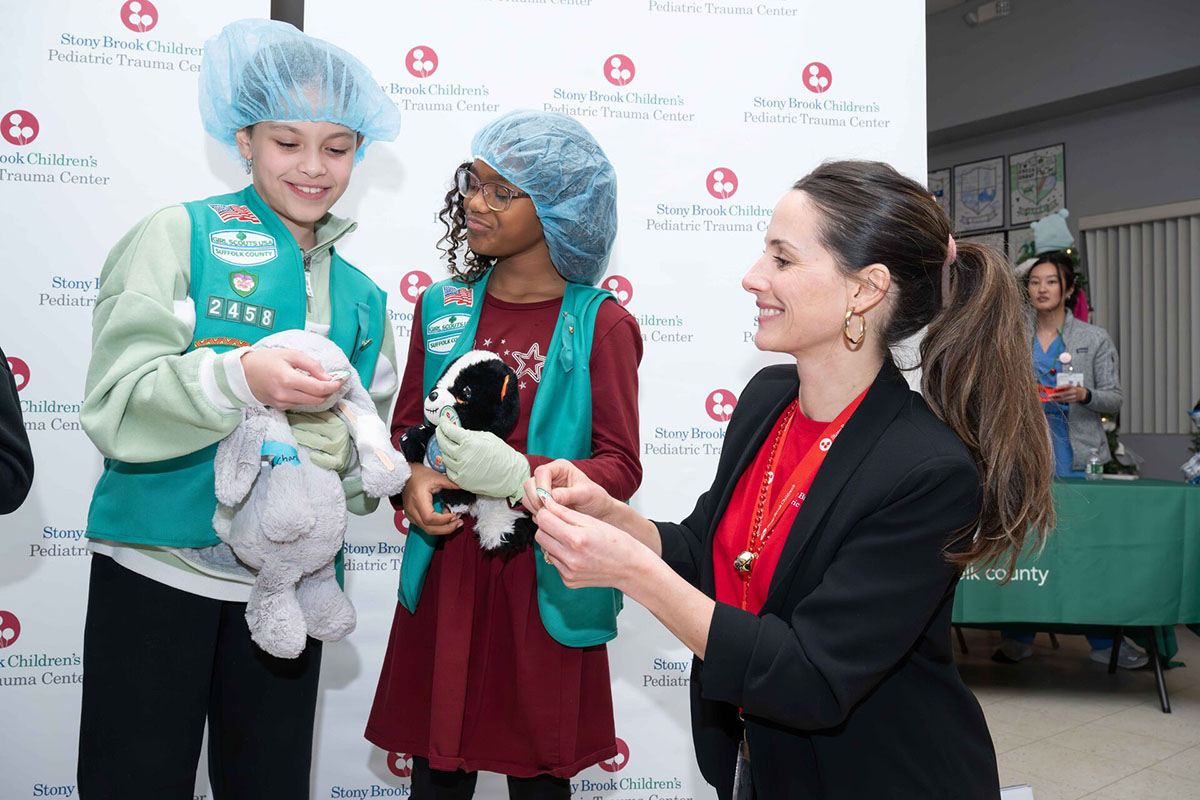
Teddy Bear Clinics, which focus on overall injury prevention for pre-K through second
grade, including passenger safety, car seat safety and helmet safety.
What Ryan loves most about all this community engagement “is that it is powerful to
see that just doing this work at a large scale really makes an impact,” she said.
Falls are a leading cause of injury-related death, hospitalization and emergency department
visits among older adults — and many falls can be prevented. Stony Brook Trauma Center, in collaboration with community organizations, offers evidence-based
Falls Prevention programs throughout Suffolk County and on Zoom for people age 65 and older and people
with Parkinson’s disease.
Kristi Ladowski, associate director of Injury Prevention & Outreach, and Sarah Cohen,
administrator for the Center for Parkinson’s Disease at Southampton Hospital, have
joined forces to bring this programming to communities across Suffolk County and the
East End.
“We focus on falls prevention, because falls in both the home and community are the
leading cause of injury-related death, hospitalization and emergency department visits
for this age group,” Ladowski said. “Falls have an impact on not just healthcare costs,
but also on quality of life. They’re a leading cause of nursing home placement, so
it’s a threat to a person’s ability to live independently.”
Ladowski said that because most falls are preventable, the free programs focus on
how to recognize risks and stop falls before they happen. This includes working on
strength and balance, components of home safety, medication, and chronic disease management,
like keeping on top of vision and other health screenings. She and Cohen work collaboratively
with community partners, like the Retired Senior Volunteer Program of Suffolk (RSVP)
Suffolk to offer balance, tai chi and Otago programs. Hosting organizations include libraries and senior centers.
One example is S.A.F.E. (Strength, Awareness, Function, Education) Falls Prevention
is an eight-week workshop developed by the university’s School of Health Professions in collaboration with Stony Brook Southampton Hospital and its Trauma Center. It’s led by graduate students in the university’s Occupational Therapy and Physical Therapy programs under faculty supervision. Classes, which are held at Stony Brook Southampton,
combine exercise, education and practical strategies to reduce fall risk and improve
quality of life.
Ladowski said greater investment in preventive services is needed and that the community
is responding.
“Our participants are our biggest cheerleaders and the biggest referral source for
more participants to engage with programming,” Ladowski said. “It’s important to remember
that we're all at risk for a fall, so we want to change the way we talk about falls
prevention. It’s all about healthy aging.”
Trauma care does not end when a patient leaves the hospital. For survivors and their
families, the physical and emotional effects of an injury can continue long after
treatment is complete.
Stony Brook is also providing support for those on a trauma recovery journey because
as Jacqueline Coffey, trauma clinical care coordinator, said, “All it takes is an
injury from motorcycle, car accidents, boating accidents, e-bike accidents, then on
a dime everything changes. They go from being completely independent and taking care
of their families and having a career to being dependent on strangers to help them.”
She said that’s why as the level one Trauma Center, Stony Brook Medicine is involved
with the National Trauma Survivor Network for people from 18 through 70. The focus is to help patients in the fourth phase
of their recovery: life after discharge.
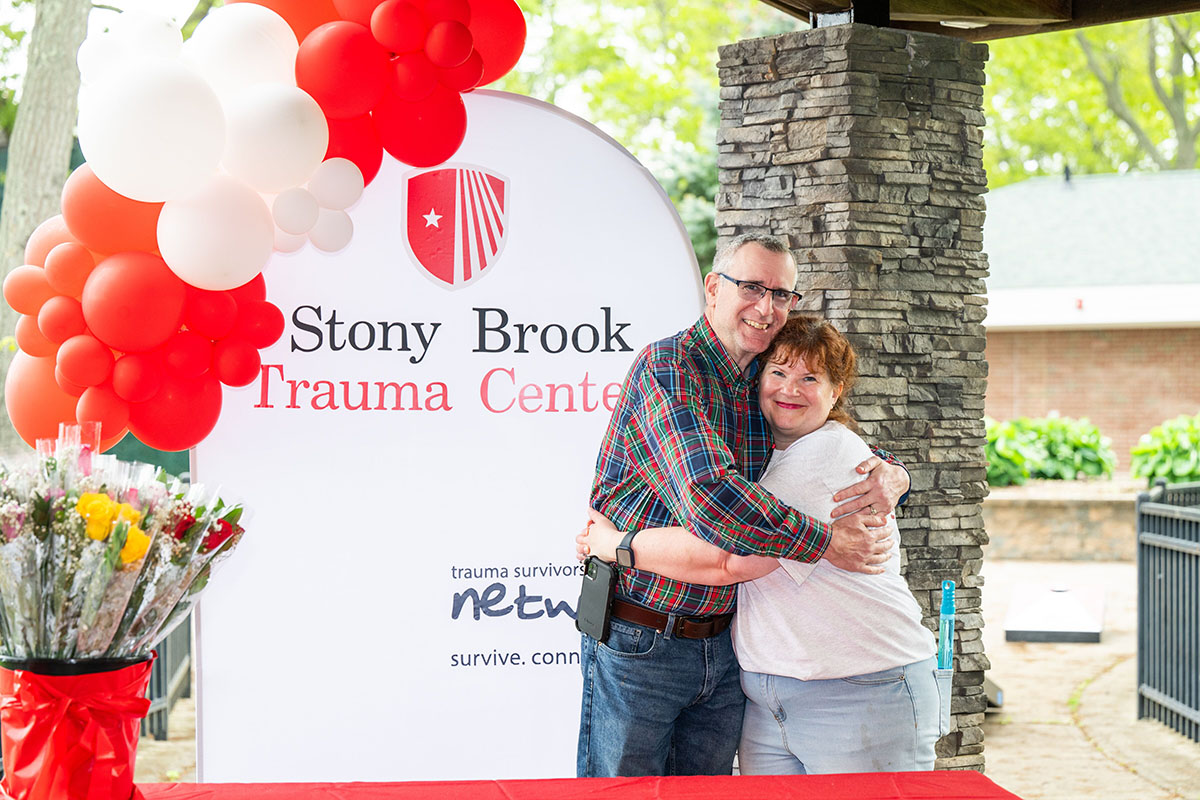
Trauma survivors, families, caregivers and community members come together for Trauma Survivors Day to meet with other trauma survivors.
Stony Brook’s annual Trauma Survivors Day event, Journey to Healing, brings trauma survivors, families, caregivers and community
members together on the third Saturday in May. Attendees connect with Stony Brook
Medicine’s trauma care team, EMS partners and fellow survivors, participate in the
Trauma Survivors Network Race to Rebuild, and learn important safety practices through
Stop the Bleed training, falls prevention and roadway safety education.
Support continues throughout the year through a monthly Zoom support group for trauma
patients and their families.
“Trauma doesn't just affect the patient. It affects the entire family unit so they
also need support,” Coffey said.
A trip to the emergency department is often distressing, so knowing the medical staff is trained to address underlying issues when they exist is an important advantage for the comfort and well-being of all patients. In fact, Dr. Erika Newton, an emergency medicine physician in the Department of Emergency Medicine, said many people live with long-term health effects after traumatic experiences, but don’t recognize that trauma may be contributing to their ongoing symptoms.
“For people experiencing chronic or recurring symptoms that have never been fully explained, it can be empowering to learn that past experiences may have played a role, to understand why the effects of trauma can persist, and to discover that there are many different paths to recovery,” Dr. Newton said.
That understanding helped inspire the Trauma Recovery Resources & Navigation Program, a trauma-informed navigator program connecting high-risk, high-ACEs (adverse childhood experiences) and other emergency department patients to therapy and community supports, reducing behavioral health disparities and improving access to definitive care.
“We started this program to help patients living with the effects of past trauma get connected to the care they need,” Dr. Newton said. “Our patient navigator provides education, guidance and practical support until patients have successfully connected with care or no longer need assistance.”
Trauma-informed care is central to that work. Forensic Nurse Practitioner Michelle Tepper, DNP, director of the Stony Brook University Hospital Forensic Nursing and Family Violence Prevention program, explained that trauma-informed care begins with recognizing how common trauma is and understanding its potential effects on a person’s health, well-being, behavior and ability to engage in care.
"Because we may not know which patients have experienced trauma, these principles should be incorporated into every patient interaction. This means asking permission before proceeding, creating a physically and psychologically safe environment, being transparent about expectations and available options, offering meaningful choices, and empowering patients to use their voice and participate in shared decision-making," Dr. Tepper said. "By approaching every patient with respect, compassion, and collaboration, healthcare providers can build trust, improve engagement, and create a safer and more supportive care experience.”
The program also demonstrates the power of partnerships within Stony Brook and throughout the community. The Stony Brook School of Social Welfare has provided master's-level social work students to serve as patient navigators, along with faculty supervision. Stony Brook Hospital Social Work has also provided supervision and support.
“We also work closely with community organizations and behavioral health providers,” said Dr. Newton. “Patients may be referred to Stony Brook's Mind Body Clinical Research Center or other trauma-focused therapists, as well as community agencies such as ECLI-VIBES, L.I. Against Domestic Violence and the Crime Victims Center. In addition, The Retreat, ECLI-VIBES, and the Suffolk County Chapter of the Association for Mental Health and Wellness have all been valuable partners in helping us explore support group and peer support options.”
May 16, 2026
December 6, 2025
Preventive care can save lives, but access to screenings and health education is not always equal across Long Island. Stony Brook Medicine is bringing preventive health services directly into communities through its Community Health Screening Program and Stony Brook HOME, a free clinic for uninsured adults.
Launched in October 2025, the Community Health Screening Program brings screening services to communities across Long Island, with a growing focus on the South Shore. Jennifer Mesiano Higham, SBM’s director of strategic engagement, said the program is designed to strengthen community engagement while expanding access to preventive care.
“We are expanding our presence in the community by hosting health screening events and building community partnerships with churches, schools, fire departments, civic groups, and community-based organizations, like the BAPS Mandir Hindu Temple in Melville, the Holtsville Ecology Center, Mastic Beach Library and New Bethel First Pentecostal Church in Bellport,” Higham said.
The program is already reaching hundreds of community members. To date, screening efforts have included:
“It's about connections and building relationships and trust in the community, and creating opportunities for people who may not be aware of the services, or may struggle to access the services to bring them to them rather than expect people to come to us.”
A new program designed to help older adults improve balance, strength and confidence ...
Continue reading“I’ve never seen such an explosion in the amount of admissions that we’ve seen over the last few years,” ...
Continue readingA hurricane knocks out power, smoke from a wildfire drifts across the Northeast, ...
Continue readingMore than 5,000 fans attended the annual Ducks Game, which featured the expo ...
Continue ReadingUshering in a new chapter in pediatric dentistry outreach, the Stony Brook School of Dental Medicine (SDM) held a special ribbon-cutting for the new center ...
Continue readingThe call for a more diverse healthcare workforce often feels urgent, ...
Continue readingAs schools across Suffolk County face a growing youth mental health crisis, Stony Brook Children’s Hospital ...
Continue readingChildren Who Stutter Find Confidence, Community at Stony Brook Southampton Camp ...
Continue reading
Spring planting season is officially underway at the Beach Street Community Garden in Port Jefferson, NY, where residents and Stony Brook University students gathered on April 30 to begin cultivating vegetables and herbs for the 2026 growing season.
Now entering its sixth year, the organic community garden has become a collaborative green space dedicated to sustainability and volunteerism. Located near Port Jefferson Harbor, the garden includes 20 plots tended by residents, community groups and students, with harvests later donated to local food pantries.
On a beautiful Saturday morning, the FoodLab’s farm at Stony Brook Southampton transformed into a living classroom as more than 80 middle school students rolled up their sleeves to help lay the groundwork for a new community garden designed to support local residents facing food insecurity.
The initiative took place April 18 during the “Cultivating Change” community event, where students in the Stony Brook Future Scholars Program — representing five East End school districts — participated in hands-on agricultural workshops rooted in sustainability and stewardship. The day culminated with students helping prepare the community garden site for future planting and cultivation.
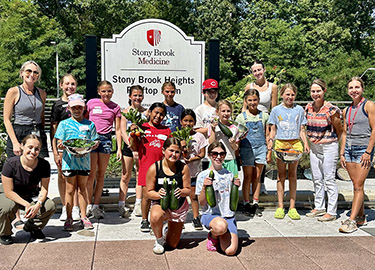
More than a dozen local children experience how food moves from farm to table and worked on building healthy habits through unique cooking and nutrition classes at Stony Brook Medicine.
The annual Healthy Cooking and Baking Classes encourage children to gain kitchen experience and learn healthier cooking habits at an early age.
For a group of 25 Longwood High School students, a series of visits to Stony Brook
University offered a view of where an interest in science could lead. Stony Brook University Athletics hosted more than 120 young athletes in the Pritchard
Gymnasium for its annual National Girls and Women in Sports Day Youth Clinic. At the intersection of innovation and compassion, a senior design team of three women
— Polina Bragina, Molly Rubin and Anna Koulakova — developed a custom-weighted vest
to help Chestnut, a sea turtle who has spent more than a decade battling positive
buoyancy. Thirty high school students gathered inside Stony Brook Medicine’s Advanced Specialty
Care at Lake Grove on March 7 to network and learn at the annual Women in Sports Medicine
Mentorship Workshop.
 Read more
From Drones to Code: Women in STEM High School Students Explore Career Pathways
 Read more
National Girls and Women in Sports Day Clinic Connects Young Athletes with Seawolves
Role Models
 Read more
Engineering with Empathy: All-Women Senior Design Team Creates 3D-Printed Vest to
Help Injured Sea Turtle
 Read more
Stony Brook Women’s Sports Medicine Mentorship Program Is a Win
Across Long Island and New York City, Stony Brook faculty are bringing their expertise beyond campus to address community needs while giving students meaningful, real-world experience. Through partnerships with nonprofits, schools and community organizations, faculty like Agnes McConlogue Ferro and Mei-Lin “Ete” Chan are creating opportunities for students to learn by working alongside the communities they serve.

Since its founding in 2014, the Collaborative for Community Engagement (CCE) in the Stony Brook School of Health Professions has brought faculty, students and community partners together to address social and health-related disparities.
Currently led by Agnes McConlogue Ferro, the CCE draws on expertise across the School of Health Professions, including athletic training, clinical laboratory sciences, health science, occupational therapy, physical therapy, physician assistant, respiratory care and speech-language pathology. About 40 faculty, staff and community members are currently involved, with collaborations focused on health equity, empowering communities and transforming lives. Students also get a chance to work with community groups through experiential learning experiences.
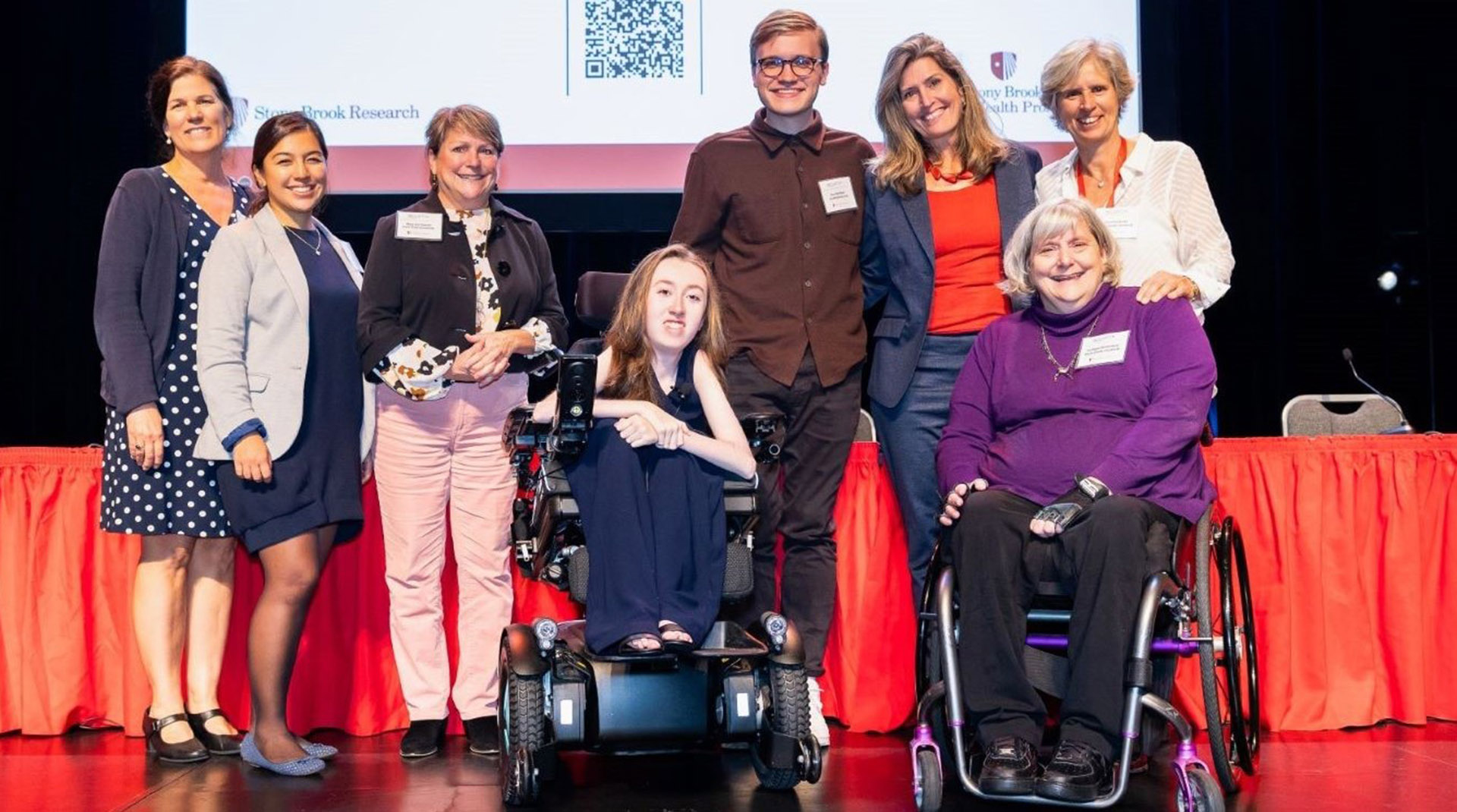
Recent initiatives have included community health fairs; an obesity-awareness walk-a-thon with the National Coalition of 100 Black Women Suffolk Chapter; series of presentations on prevention of tick borne diseases; and an event with Keep Your Change, a nonprofit academic and life skills support program based in Amityville.
“To me the most important part of this program is encouraging and empowering our community to let us know what their needs are and to collaborate with us as a School of Health Professions to address and bridge the gaps. This is our mission as a school and as a University,” Ferro said. “Community engagement is partnership; it's collaboration; it's an equalizer. It's not working in a silo.”
Ferro’s commitment to community partnership also extends to New York City. A physical
therapist, she co-founded an inclusionary dance program, DREAM (Dancers Realize Excellence Through Arts and Movement) in collaboration with the National Dance Institute (NDI). Stony Brook Doctor of
Physical Therapy students volunteer at DREAM’s week-long camp in Harlem each February
and August, gaining hands-on experience while supporting children with disabilities.
As for the CCE, Ferro said the center is always looking for new community partnerships.
“We're always looking for more community members to be involved, whatever their needs
are, if it correlates to something that the School of Health Professions can address
and support and meet whatever those needs are.”
The free Inclusion Done Right Conference is one example. Now in its fourth year, the conference, which will take place on
November 6, 2026, brings university and community partners together to promote inclusive,
community-based opportunities and improve participation for people with disabilities.
 Q&A with ...
It actually started around 2016. I had applied for an NSF (National Science Foundation) grant, and while the science was solid, the outreach component was weak, so it wasn't funded. I wanted to find a better, more appealing way to connect with the public. I found a model at UC San Diego where scientists collaborated with an aquarium — just setting up a table with a scientist, some display materials, or live crabs.
It was simple and effective, so I reached out to the Long Island Aquarium in Riverhead. They were very excited and helpful, and that’s how we launched our collaboration.
It’s very relaxed and interactive. Usually, it takes place on the third Saturday of every month from around noon until 3:00 PM.
The aquarium sets up two or three tables, and we ask a visiting scientist to bring hands-on items related to their research. One researcher brought scallops and an extensive seashell collection for children to play with; another brought a big bucket of mud that kept a child engaged the entire afternoon.
We keep the concepts accessible so we can engage everyone—from young children playing with shells to teenagers and parents asking deeper questions.
Presenters come from Stony Brook University, including the School of Marine and Atmospheric Sciences, Cornell Cooperative Extension, New York Sea Grant, and occasionally guest institutions like Rutgers or NOAA’s Milford Lab.
The topics are extremely diverse and go beyond just marine life:
Living on an island, you might expect people to know a lot about local marine life, but many visitors don't realize basic facts—like distinguishing a clam from an oyster or a mussel.
More importantly, it makes environmental science tangible. When we talk about ocean acidification, we can show visitors actual baby clam shells with holes in them caused by lower pH levels. It transforms a concept from a "news buzzword" into a concrete reality happening right here on Long Island. It connects young people with real scientists. If a teenager expresses interest in studying marine life, we can directly guide them toward paths or researchers in that field.
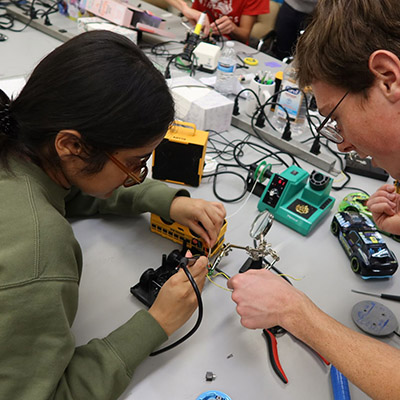
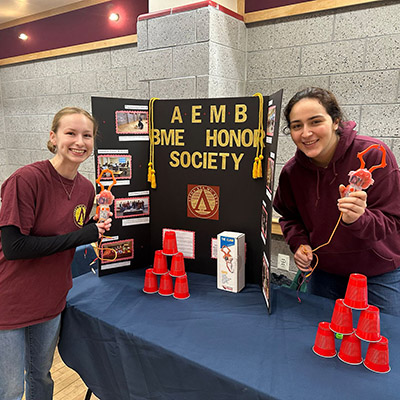
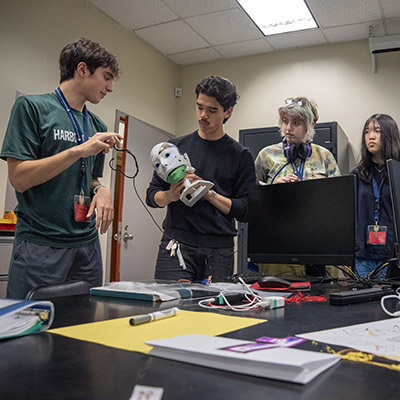
For junior biomedical engineering major Franchesca Jayden Miguel, community partnership has transformed a classroom concept into a project designed to make physical therapy more engaging for children with cerebral palsy at United Cerebral Palsy (UCP) Association of Greater Suffolk.
For two years, Miguel has worked on a project to “gamify physical therapy,” developing a game inspired by the Carnival Kentucky Derby game. The project uses wearable devices, such as neck and knee braces, to measure children’s physical engagement while encouraging them to participate in their exercises.
“The goal is to create a physical therapy game to strengthen the legs of kids with
cerebral palsy,” she said. “We want to measure the child's physical engagement in
therapy exercises, while making it very engaging and fun for them, instead of making
it like a task or chore.”
The project is part of EPICS (Engineering Projects in Community Service), piloted
by Mei-Lin “Ete” Chan in November 2025 in partnership with Stony Brook’s Vertically Integrated Project (VIP) Program and the Center for Service Learning and Community Service.
Chan, an assistant professor in the Biomedical Engineering Department, created EPICS
to connect students with local nonprofits and give them opportunities to apply their
skills to real community needs.
“By partnering with external not-for-profit community organizations, educational institutions
and governmental agencies, students have an opportunity to provide service to the
local and global community while working with a team of multidisciplinary students
and gaining academic credits,” Chan said.
As a result of these partnerships, students have been able to create projects for
UCP, including Go Baby Go, a converted toy car for toddlers not yet ready for a wheelchair,
and the Toddler Mobility Trainer, a wheelchair for toddlers constructed with wood
or 3D printing.
Chan also launched the 3D PATH (3D Printing and Assistive Technology for Health) Club, which brings students from
across academic disciplines together to modify toys for children with disabilities.
Now in its fourth year, the club’s Toy Adaptation Event combines technical training,
community engagement and professional networking. Last year, students distributed
30 adapted toys to local nonprofit organizations, including UCP, AHRC and Angela’s
House.
The partnerships have also expanded beyond Long Island. EPICS has worked with an occupational
therapist in Kansas to develop Lipsync, a mouth-operated device for texting and web
surfing for a person with quadriplegia following a traumatic injury. Students are
also working with a local high school student and 3D-PATH to create 3D-printed assistive
technology for people with arthritis in her community in India.
“When the student knows that someone is going to use what they’re working on, it's
such a big motivator," Chan said.
That was exactly Miguel's experience.
“I realized how much impact it has on the kids whenever I visit and see something
that I contributed to," Miguel said. "I think that a lot of hands-on experience is
important in my education.”
Stony Brook is proud to partner with school districts across Long Island on various college pathway and workforce readiness programs. Explore a few of the programs below and use the filter to sort by district.
No matching results found.
| Program Name | School District Partners |
| Academy for Civic Life | Brentwood Union Free School District |
| Doctors Back to School Program | Brentwood Union Free School District, Longwood Central School District, Wyandanch Union Free School District, William Floyd School District |
| Future Scholars Program | Riverhead Central School District, Bridgehampton Union Free School District, Tuckahoe Common School District, Southampton Union Free School District, Hampton Bays Union Free School District |
| Health Occupations Partnership for Excellence (HOPE) Program | Brentwood Union Free School District, Longwood Central School District, Wyandanch Union Free School District, William Floyd School District |
| High School Women in STEM Career Awareness Series | Longwood Central School District |
| Stony Brook University Hospital Site Visit | Smithtown Central School District, East Islip School District, Commack Union Free School District |
| Summer Youth Employment: A Taste of the Trades | South Country Central School District, William Floyd School District, Longwood Central School District |

Pre-College Summer Programs
Ready to see what college is really like? Spend a week (or more!) experiencing Stony Brook University. You'll try out a subject you're curious about, make new friends from far away, and get a genuine feel for college life. Whether you're already set on a major or still figuring it out, you'll leave better prepared for your next steps.
The Academy of Civic Life is a pre-college program for rising high school seniors at Brentwood High School. It is a collaborative partnership between Stony Brook University, Brentwood High School, and the Suffolk County Human Rights Commission.
The program begins with a two-week summer residential experience at Stony Brook University, continues with year-long mentorship during the students' senior year, and culminates in a spring civic engagement project and campus symposium.
The program aims to:
The program is completely free for participants. Housing, meals, tuition, learning materials, and transportation are fully covered.
Funding was initially provided by a three-year grant from the Teagle Foundation under their Knowledge for Freedom initiative, extended through judicious budgeting and bridge grants, alongside administrative and financial support from Stony Brook University, including the Office of Diversity, Inclusion and Intercultural Initiatives (DI3).
In addition, students work in small groups throughout their senior year to design and implement a community-focused project (e.g., addressing local mental health awareness). In May, groups present their completed projects and outcomes on campus to the Suffolk County Human Rights Commission, families, and program alumni.
Beyond college readiness, student evaluations and testimonials highlight:
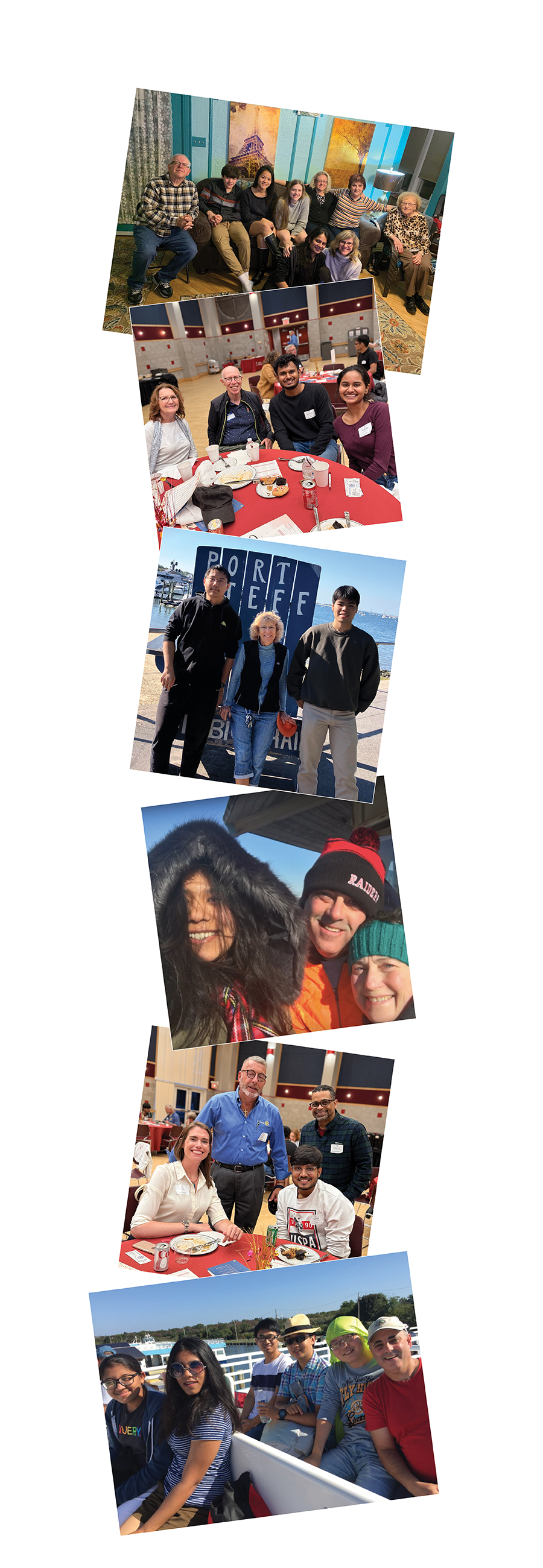
Each year, Stony Brook University welcomes about 4,000 students from more than 100 countries. For many international students, arriving at a new university also means navigating a new culture and community far from home. The International Student Success office provides resources to help students feel at home on campus, while the International Family & Friends Program (IFFP) extends that sense of belonging beyond campus.
Launched in 2019, IFFP pairs incoming undergraduate and graduate international students
with local community members who can help them get to know Long Island and build connections
beyond the university.
“IFFP lets students meet with other people on Long Island to help them feel more connected
to America and to bring them that sense of belonging,” said Ashley Perrone, EdD, International
Student Success coordinator, about the program, which launched in 2019. She said it’s
another “line of support where community members can take the international student
under their wing and take them for local sightseeing, invite them for events like
Thanksgiving dinner and Super Bowl Sunday.”
The program receives more than 100 student applications each year, with typically 30 to 40 community members participating annually, about 20 of whom return from previous years.
Perrone matches students and community members based on academic interests and hobbies. Most volunteers are Stony Brook faculty and staff, while others come through local libraries and Rotary clubs.
Paul Moran of Middle Island, who is entering his third year in the program, learned about IFFP through the Patchogue Rotary Club, where he is president. Two years ago, he took a student from mainland China on his first trip to see the ocean and to a Mets game. The student has since become a family friend.
“The program was something that appealed to me,” said Moran, who is on the board of Big Brothers Big Sisters of Long Island. “There are a lot of headwinds that students go through and they’re here from another country and they know nobody. While I got the impression that I was making a difference, I was very surprised as to how much fun it was for me.”
Perrone agreed the impact of the program has been mutual. “It's helped those involved learn about different cultures and how to support one another. That's really the heart of the program, to just continue to make the international students feel welcomed and like they belong in America.”
That’s the heart of Be the Bridge: creating connections that help people feel welcomed, supported and part of the Stony Brook University and Stony Brook Medicine community.
Community members are encouraged to join the IFFP's mailing list to be notified when applications open!