


SnappyXO Robotics Platform Expands STEM Education Reach
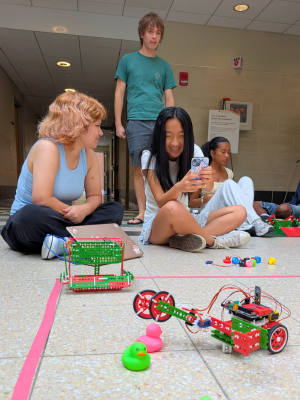 SnappyXO, a robotics education platform developed at Stony Brook University is poised
to reach more students and educators through a new licensing partnership with A+ Mobile Solutions.
SnappyXO, a robotics education platform developed at Stony Brook University is poised
to reach more students and educators through a new licensing partnership with A+ Mobile Solutions.
Associate Professor Anurag Purwar created SnappyXO to make robotics education accessible, design-focused, and engaging for learners at multiple levels. The modular platform enables students to design and build robotic systems using tool-free components, lowering barriers to entry while maintaining a strong emphasis on engineering principles, creativity, and hands-on problem solving.
Through the new partnership, A+ Mobile Solutions will support the continued development and distribution of SnappyXO, expanding its use in classrooms, higher education programs, and workforce development initiatives.
Facilitated by Stony Brook’s Intellectual Property Partners (IPP), the licensing agreement reflects the university’s commitment to translating research discoveries into solutions that benefit society. By connecting faculty innovations with industry partners, Stony Brook helps move technologies developed on campus into broader educational and commercial applications.
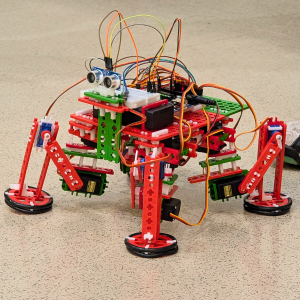 Purwar said seeing SnappyXO evolve from a classroom teaching tool into a commercially
available educational platform represents an important milestone for both the project
and the university's innovation ecosystem.
Purwar said seeing SnappyXO evolve from a classroom teaching tool into a commercially
available educational platform represents an important milestone for both the project
and the university's innovation ecosystem.
“As the primary inventor of SnappyXO, this licensing agreement with A+ is especially meaningful to me. SnappyXO began with a simple vision: to give MEC101 students an accessible, hands-on platform through which they could experience the excitement of designing, building, and programming their own machines and robots. In the process, they learn mechanical design, practical electronics, and computer programming, all in one class! Seeing that idea grow from an academic project into a product that can reach classrooms and students more broadly is deeply gratifying. Our team is grateful for funding support from the NSF I-Corps and SBIR/STTR programs, SPIR, SUNY Research Foundation, and MTRC, and most importantly to our department and College for believing in our mission.”
For more information: