


Closing the Loop
The final and most critical step in the assessment process is "closing the loop," meaning the intentional use of assessment results to inform future actions, such as decision-making, continuous quality improvement, and resource allocation.
Identifying Potential Actions & Improvements
When evaluating assessment data and results with your program, consider the following general questions:
- Was the objective met?
- If so, what went well?
- If not, what can be changed or improved next time to help students achieve the PLO's knowledge, skill, or ability?
- What will we do with this information to improve our program and/or services?
Then, once you implement change or improvements, reflect further to consider:
- Did the change or improvement have the intended impact?
- Did the change or improvement bring new information to light?
- Will you continue with this change, reverse course, or implement a different intervention moving forward?
Implementing Changes & Improvements
When implementing interventions to address performance outcomes, consider the following questions:
Can we improve our curriculum?
- Revise course sequencing or program requirements
- Revise course learning objectives, content or assignments
- Revise syllabus, teaching methods, or instructional materials
Can we improve our administrative process?
- Revise admissions criteria or policies
- Revise advising policy or processes
- Streamline or support registration
- Streamline or support student access to University resources (IT, counseling services,
financial aid, etc.)
What additional resource allocations would improve outcomes?
- Commit funding to specific areas, such as tutoring services, teaching assistantships, or graduate assistants
- Hire additional faculty or staff
- Provide adequate space or other physical resources to students or faculty to facilitate
teaching and learning
Can we improve the assessment process itself?
- Revise PLOs or CLOs
- Revise mapping of PLOs to courses or assignments
- Revise benchmarks
- Revise timelines or sequencing of assessment process
Document and Repeat
Once you have decided upon the best resolution to foster continuous improvement of your programs and achievement of program learning objectives, be sure to document your actions in your formalized annual report. This will help you to stay accountable and establish an historical record over time.
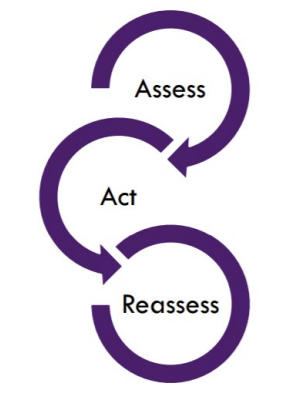
Next, start the process once again! Assessment is a cyclical, continuous process which strives for ongoing, incremental improvements. There is always work to be done!
Image and content adapted from "Closing the Assessment Loop" by the University of South Carolina.