<?xml version="1.0" encoding="UTF-8"?>
<item href="/__admin-units/krish-new/demo-maya-chen.html" dsn="krish-faculty">
   <schema-version>1</schema-version>
   <content-type>faculty</content-type>
   <first-name>Maya</first-name>
   <middle-name/>
   <last-name>Chen</last-name>
   <display-name/>
   <suffix/>
   <pronouns/>
   <name-pronunciation/>
   <title>Associate Professor</title>
   <department>Computer Science</department>
   <school>College of Engineering and Applied Sciences</school>
   <appointments/>
   <expertise>AI verification; autonomous systems; formal methods</expertise>
   <summary>Maya Chen studies dependable artificial intelligence and autonomous systems. Her group connects formal verification, uncertainty analysis and reproducible experiments to understand when learning-enabled systems can be trusted and how their limits should be communicated.</summary>
   <category>research</category>
   <listing-enabled>true</listing-enabled>
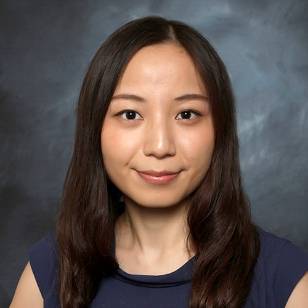
   <portrait>
      <img src="/__admin-units/krish-new/_images/maya-chen-placeholder.jpg"
            alt="Borrowed portrait of Jiaru Bai; placeholder for fictional Maya Chen"/>
   </portrait>
   <email>maya.chen@example.org</email>
   <phone>631-555-0110</phone>
   <fax/>
   <building>Example Faculty Hall</building>
   <room>210</room>
   <address>Example Department Office, Stony Brook, NY 11794 (demonstration address)</address>
   <office-hours>By appointment; illustrative availability Tuesday 2:00-4:00 p.m.</office-hours>
   <contact-person/>
   <languages>English</languages>
   <cv>/__admin-units/krish-new/_media/maya-chen-sample-cv.pdf</cv>
   <resume>/__admin-units/krish-new/_media/blank-faculty-resume-template.pdf</resume>
   <cv-updated>2026-10-04</cv-updated>
   <website/>
   <lab-name/>
   <lab-url/>
   <orcid/>
   <scholar/>
   <researchconnect/>
   <researchgate/>
   <scopus/>
   <web-of-science/>
   <linkedin/>
   <github/>
   <evaluation/>
   <biography>
      <p>Maya Chen is an associate professor of computer science whose work examines how learning-enabled systems can be evaluated before they are deployed in settings where mistakes are costly. Her research sits at the intersection of formal methods, machine learning and cyber-physical systems. She is particularly interested in the gap between a model that performs well on a benchmark and a system that behaves reliably when its environment changes.</p>
      <p>Chen directs the fictional Reliable Intelligence Laboratory, where graduate and undergraduate researchers develop tools for analyzing autonomous decision making. The group combines mathematical models with carefully designed experiments, using simplified robotic platforms and openly documented simulations to study uncertainty, feedback and failure recovery. A recurring question in her work is how a safety requirement can become a practical test that engineers can reproduce and interpret.</p>
      <p>Before joining the faculty, Chen completed doctoral training in computer science and worked as a postdoctoral researcher on verification tools for embedded systems. That experience shaped her collaborative approach: she works closely with researchers in applied mathematics, engineering and human-centered design to make technical guarantees useful to the people who build and operate a system.</p>
      <p>In the classroom, Chen connects abstract ideas to small experiments that students can implement themselves. She teaches courses in artificial intelligence and program verification and advises projects that emphasize reproducible results, clear documentation and responsible problem formulation. Her current interests include monitoring deployed models, describing the limits of a verification result and helping students communicate uncertainty without losing precision.</p>
   </biography>
   <education>
      <ul>
         <li>PhD, Computer Science, Example University, 2014</li>
         <li>MS, Computer Science, Example Institute, 2010</li>
         <li>BS, Mathematics, Example College, 2008</li>
      </ul>
   </education>
   <experience>
      <ul>
         <li>Associate Professor, Department of Computer Science, Example University, 2022-present.</li>
         <li>Assistant Professor, Example University, 2016-2022.</li>
         <li>Postdoctoral Research Fellow, Example Institute for Systems Research, 2014-2016.</li>
         <li>Research Intern, Example Autonomous Systems Group, summers 2011 and 2012.</li>
      </ul>
   </experience>
   <research>
      <h3>Verification for learning-enabled systems</h3>
      <p>We develop methods for checking whether a system respects explicitly stated constraints across a defined range of operating conditions. Our models combine learned components with conventional control logic, allowing us to study where a guarantee holds and where additional testing is needed.</p>
      <h3>Monitoring and uncertainty</h3>
      <p>A second research theme studies runtime monitors that detect when a system is leaving the conditions represented in its training data. The goal is to support graceful fallback behavior and understandable evidence for engineers.</p>
      <h3>Reproducible evaluation</h3>
      <p>The laboratory builds small, documented benchmarks that let other groups compare assumptions as well as accuracy. Projects pair formal analysis with simulation and report limitations alongside results.</p>
   </research>
   <projects>
      <h3>Safe Learning Testbed | 2024-2027</h3>
      <p>An illustrative collaboration between computer science and electrical engineering to evaluate adaptive controllers under changing sensor quality. Student teams maintain benchmark scenarios, automated reports and a reproducibility guide.</p>
      <h3>Specification Workshop | 2025-2026</h3>
      <p>A fictional interdisciplinary project exploring how domain experts translate operational requirements into testable statements. The team compares mathematical specifications with the language used in design reviews.</p>
   </projects>
   <grants>
      <ul>
         <li>Reliable Autonomy under Distribution Shift - Example Research Foundation; principal investigator; 2024-2027; illustrative award EX-24018.</li>
         <li>Reproducible Verification Benchmarks - Example Computing Consortium; co-investigator; 2025-2026; illustrative award EX-25103.</li>
      </ul>
   </grants>
   <opportunities>
      <p>The fictional Reliable Intelligence Laboratory welcomes example inquiries from students interested in formal methods, machine learning and reproducible systems research. Suitable projects may involve benchmark design, software tooling or mathematical analysis. Prospective collaborators would include a short description of their interests and relevant preparation. This is demonstration content, not an active recruitment announcement.</p>
   </opportunities>
   <publications>
      <p>All citations below are fictional samples, included to demonstrate formatting.</p>
      <h3>Journal articles</h3>
      <ol>
         <li>Chen, M., Ito, R., and Wells, A. (2026). Monitoring adaptive decision systems under changing observations. <em>Example Journal of Reliable Computing</em>, 18(2), 101-124.</li>
         <li>Chen, M. and Osei, D. (2025). Interpretable safety envelopes for learned controllers. <em>Illustrative Systems Review</em>, 12(4), 215-238.</li>
         <li>Wells, A., Chen, M., and Ito, R. (2024). Benchmark design for reproducible verification studies. <em>Example Transactions on Software Methods</em>, 9(1), 1-22.</li>
      </ol>
      <h3>Conference papers</h3>
      <ul>
         <li>Chen, M. and Park, L. (2025). Stress-testing perception pipelines with structured perturbations. Proceedings of the Example Symposium on Safe AI, 44-53.</li>
         <li>Ito, R. and Chen, M. (2024). Reachability analysis for compact neural controllers. Example Formal Methods Conference, 120-132.</li>
         <li>Chen, M. (2023). Explaining assumptions in verification results. Example Workshop on Trustworthy Systems, 16-21.</li>
      </ul>
   </publications>
   <creative-work/>
   <datasets-software>
      <h3>Example verification toolkit</h3>
      <p>A fictional research toolkit for evaluating compact neural controllers. The demonstration description includes model assumptions, example configurations and reproducibility notes; no software download is implied.</p>
      <h3>Illustrative benchmark collection</h3>
      <p>Sample scenarios explore changing sensor quality, delayed observations and safe fallback behavior. A real entry could include a repository, version, license and persistent identifier.</p>
   </datasets-software>
   <teaching>
      <p>My courses balance mathematical reasoning with implementation. Students first articulate what they expect a system to do, then build a small experiment that tests that expectation. Assessments reward readable code, thoughtful comparisons and an honest account of limitations. Weekly discussion sessions make space for questions about the social context of technical choices.</p>
   </teaching>
   <courses>
      <ul>
         <li>CSE XXX - Foundations of Artificial Intelligence; undergraduate; fall; search, learning and evaluation.</li>
         <li>CSE YYY - Program Verification; graduate; spring; invariants, model checking and proof strategies.</li>
         <li>CSE ZZZ - Reliable Learning Systems Seminar; graduate; rotating topics and paper presentations.</li>
      </ul>
   </courses>
   <mentoring>
      <p>The laboratory supports doctoral, master’s and undergraduate projects. New members begin with a reproducibility exercise and a short research proposal. Mentoring meetings combine technical feedback with discussion of writing, collaboration and career development. Projects may focus on tools, benchmarks or theory, depending on a student’s preparation and interests.</p>
   </mentoring>
   <clinical/>
   <certifications/>
   <service>
      <ul>
         <li>Member, fictional Graduate Curriculum Committee, 2023-present.</li>
         <li>Organizer, Example Workshop on Reproducible AI, 2025.</li>
         <li>Faculty adviser, illustrative undergraduate computing research group.</li>
      </ul>
   </service>
   <outreach/>
   <awards>
      <ul>
         <li>Example Early Career Research Award, 2025.</li>
         <li>Illustrative Reproducible Research Recognition, 2024.</li>
         <li>Example Graduate Teaching Commendation, 2021.</li>
      </ul>
   </awards>
   <talks/>
   <media/>
   <additional-links>
      <h3>Demonstration documents</h3>
      <p>The CV contains fictional sample content. The resume link opens a blank reusable template.</p>
      <h3>Portrait credit</h3>
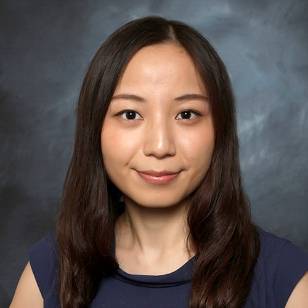
      <p>Borrowed photograph of Jiaru Bai from a public Stony Brook faculty page, used only as a layout placeholder. This photograph does not depict Maya Chen. <a href="https://www.stonybrook.edu/__academic-units/business/_images/people/jiaru-bai.jpg">View original portrait source</a>.</p>
   </additional-links>
   <custom-content/>
   <custom-heading/>
   <demo-record>true</demo-record>
   <record-id>demo-maya-chen</record-id>
   <layout>tabs</layout>
</item>