



Guidance on proper disposal of containers of chemical waste.
Containers with less than 3% of their contents that are not contaminated with infectious material or do not contain a P-listed material, such as stock bottles, laboratory glassware, and plasticware must be triple rinsed prior to disposal.
- Laboratory glassware or plasticware contaminated with biological material must be disposed of as Regulated Medical Waste (RMW).
- P-listed material, even when empty, must be disposed of as hazardous waste.
- Sample vials with small amounts of chemicals must be collected as hazardous waste if it's unable to be rinsed.
After removing as much product as possible, your empty chemical container may be rinsed and disposed of or reused to store waste by following these steps:
- Using a small amount of water rinse the inside of the container. If the material is not water soluble, triple rinsing is not allowed (label the container as hazardous waste if you cannot triple rinse it).
- Rinse must be collected as hazardous waste of the original waste content and you may combine compatible wastes into one waste container.
- Repeat this step two more times for a total of three rinses.
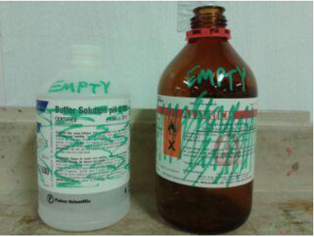
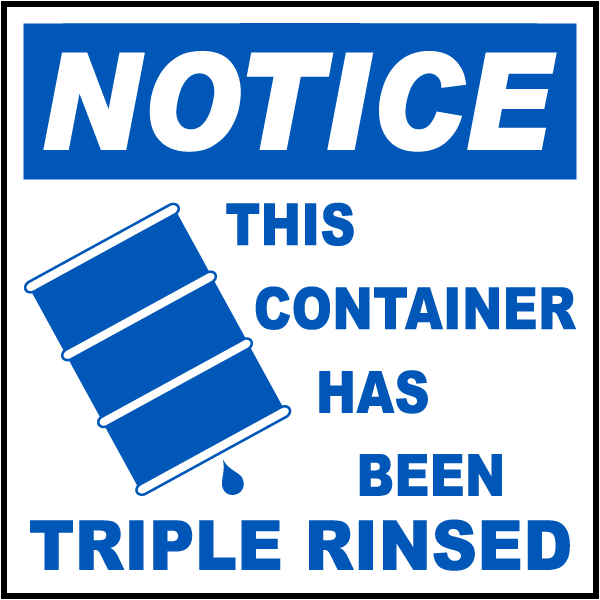
- When the container is empty and ready to be discarded, deface the container’s label (example below) and clearly write "Empty" and/or “Triple Rinsed".
Reuse of Empty or Triple Rinsed Containers
Empty or triple rinsed containers may be reused for the collection of hazardous wastes,
if:
- The original container's contents are compatible with the waste that the container is being used for; and
- The container is compatible with the waste contents; and
- The container is in good working condition: no dents, cracks or corrosion.
For all empty containers that previously held a P-listed material, do not triple rinse! These containers must be disposed of as hazardous waste, even if they’re empty. Contact hazwaste@stonybrook.edu for any questions regarding P-listed container disposal.
| Chemical name (common P-listed waste) | CAS number |
|---|---|
| 4-Aminopyridine | 504-24-5 |
| Acrolein | 107-02-8 |
| Allyl alcohol | 107-18-6 |
| Arsenic compounds | Varies |
| Beryllium powder | 7440-41-7 |
| Cyanide salts (inorganic) | Varies |
| Carbon disulfide | 75-15-0 |
| Copper cyanide (Cu(CN)) | 544-92-3 |
| Cyanogen | 460-19-5 |
| Cyanogen chloride | 506-77-4 |
| 2,4-Dinitrophenol | 51-28-5 |
| Epinephrine | 51-43-4 |
| Nicotine and salts | 54-11-5 |
| Nitrous and Nitric oxide | 10102-44-0, 10102-43-9 |
| Osmium tetroxide | 20816-12-0 |
| Potassium cyanide (KCN) | 151-50-8 |
| Propargyl alcohol | 107-19-7 |
| Sodium azide | 26628-22-8 |
For a complete list of p-listed chemicals, visit the U.S. Environmental Protection Agency's website.
Plastic: Triple rinsed plastics other than #1 and #2 written in the universal recycling symbol (♻) must be disposed of in the trash. Town of Brookhaven does not recycle plastics other than #1 or #2.
Glass: Triple rinsed glass containers must be disposed of in the trash if they’re not being
reused.
Glass containers that have been triple rinsed may be placed in garbage bags, corrugated
cardboard boxes or "broken glass" boxes before being disposed of. Town of Brookhaven does not recycle glass and glassware in recycling containers will
not be accepted.
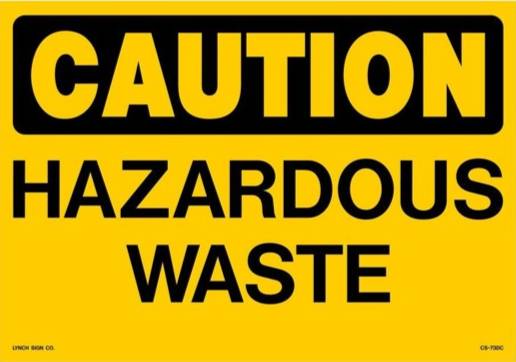
Under no circumstances are containers labeled with the international radioactive symbol, biohazard symbol, or with the words "Hazardous Waste" allowed to be disposed of in the trash.



MANAGER OF HAZARDOUS MATERIALS AND WASTE
Walter Julias | (631) 632-3739 | Walter.Julias@stonybrook.edu