Thornless Honey Locust (Gleditsia triacanthos f. inermis)

"Filtered shade, delicate foliage, and remarkable adaptability have made thornless honey locust a favorite urban tree."

Take a Moment: Look up through the fine, fern-like leaves and notice how sunlight filters gently through the canopy. Unlike many shade trees, honey locust creates cool shade without making the landscape feel dark.

Why We Love This Tree

Thornless honey locust offers beauty without heaviness. Its airy canopy allows lawns, flowers, and gardens beneath it to thrive while providing welcome shade on warm days.

Its openness reminds us that even the largest trees can create space for others to flourish.
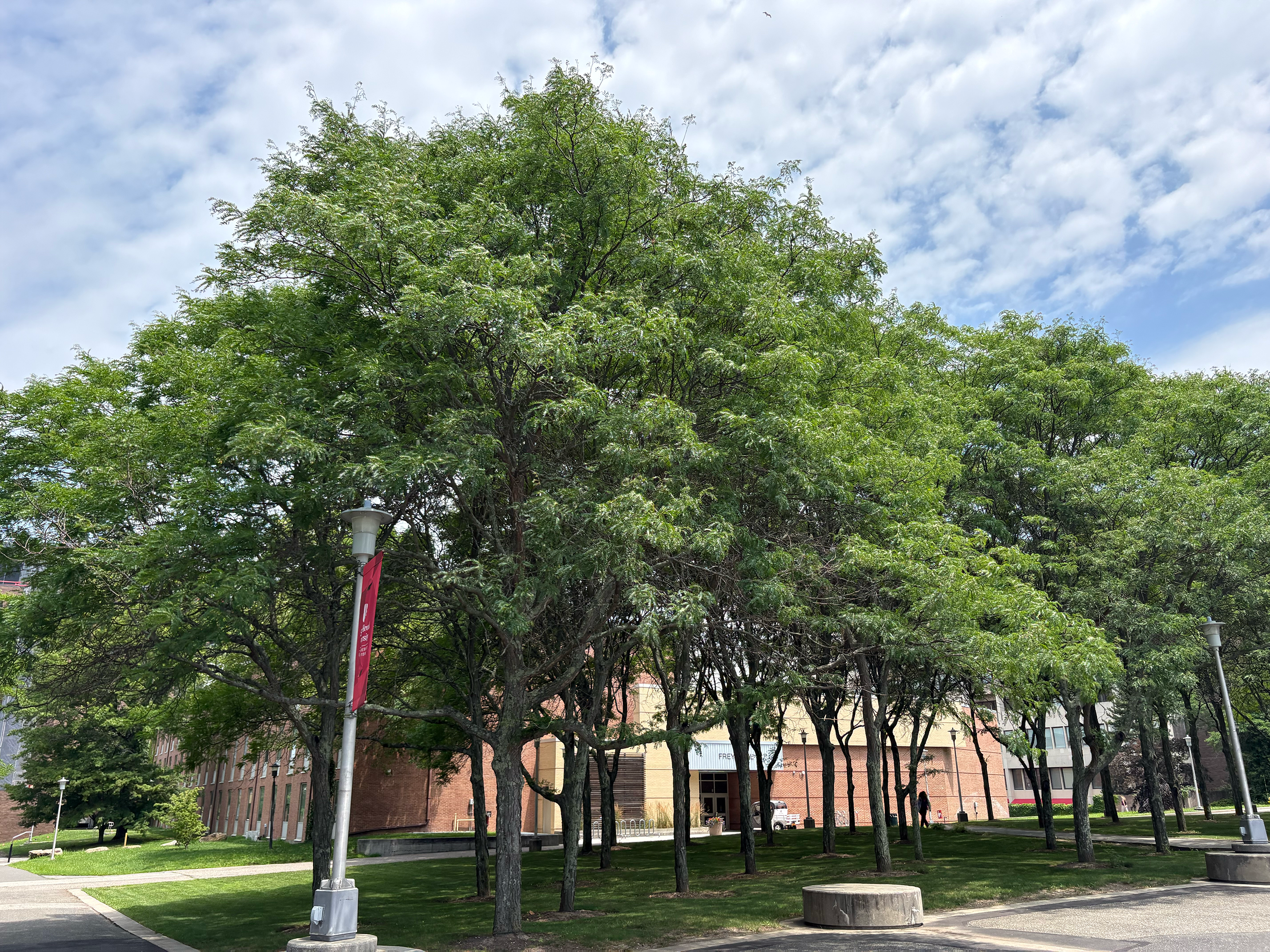


Thornless Honey Locust in summer

Thornless Honey Locust in Summer


Meet the Tree

Derived from the native honey locust, this thornless selection was developed for landscapes by eliminating the large thorns found on wild trees. Its finely textured foliage, graceful branching, and tolerance of difficult growing conditions have made it one of the most widely planted street and campus trees.

The small leaflets turn a soft golden yellow before falling in autumn.

Ecological Benefits

Its light canopy supports understory plant growth while reducing summer temperatures and improving air quality. Native insects also utilize Honeylocust foliage, providing food for birds and supporting local ecosystems.

Did You Know?


The filtered shade of Thornless Honeylocust is often called "dappled shade," making it one of the best large trees for planting over lawns and gardens.

Quick Facts

Native: Cultivar of a species native to Eastern and Central North America

Type: Deciduous Tree

Size: 40 to 70 ft tall × 30 to 50 ft wide

Sun: Full Sun

Water: Moderate

Growth Rate: Fast

Flowers: Small greenish flowers in late spring

Fall Color: Golden yellow


Botanical Profile

Family: Fabaceae

Common Names: Thornless Honeylocust

Genus Meaning: Gleditsia honors German botanist Johann Gottlieb Gleditsch.

Species Meaning: triacanthos means "three-spined," referring to the species' large thorns.


How to Recognize It

Look for these distinctive characteristics:

  • Fine, fern-like compound leaves
  • Open, airy canopy
  • Thornless branches
  • Long seed pods (on some cultivars)
  • Gray, furrowed bark
  • Golden fall foliage

Growing Conditions

Light: Full sun

Soil: Adaptable to most soils

Moisture: Moderate

Hardiness: USDA Zones 3 to 8

Tolerance: Heat, drought, salt, pollution, and compacted soils