Red Majestic Contorted Hazel (Corylus avellana 'Red Majestic')

"Twisting branches and rich purple foliage make Red Majestic a tree that captures attention in every season."

Take a Moment: Follow the spiraling branches from trunk to twig and notice how each one twists in its own unique direction. In winter, the sculptural form becomes even more dramatic against the sky.

Why We Love This Tree

Few trees offer as much character as Red Majestic. Its corkscrew branches create year-round architectural interest, while its deep burgundy foliage adds bold color throughout the growing season.

Its unusual form reminds us that beauty often comes from embracing what makes us different.
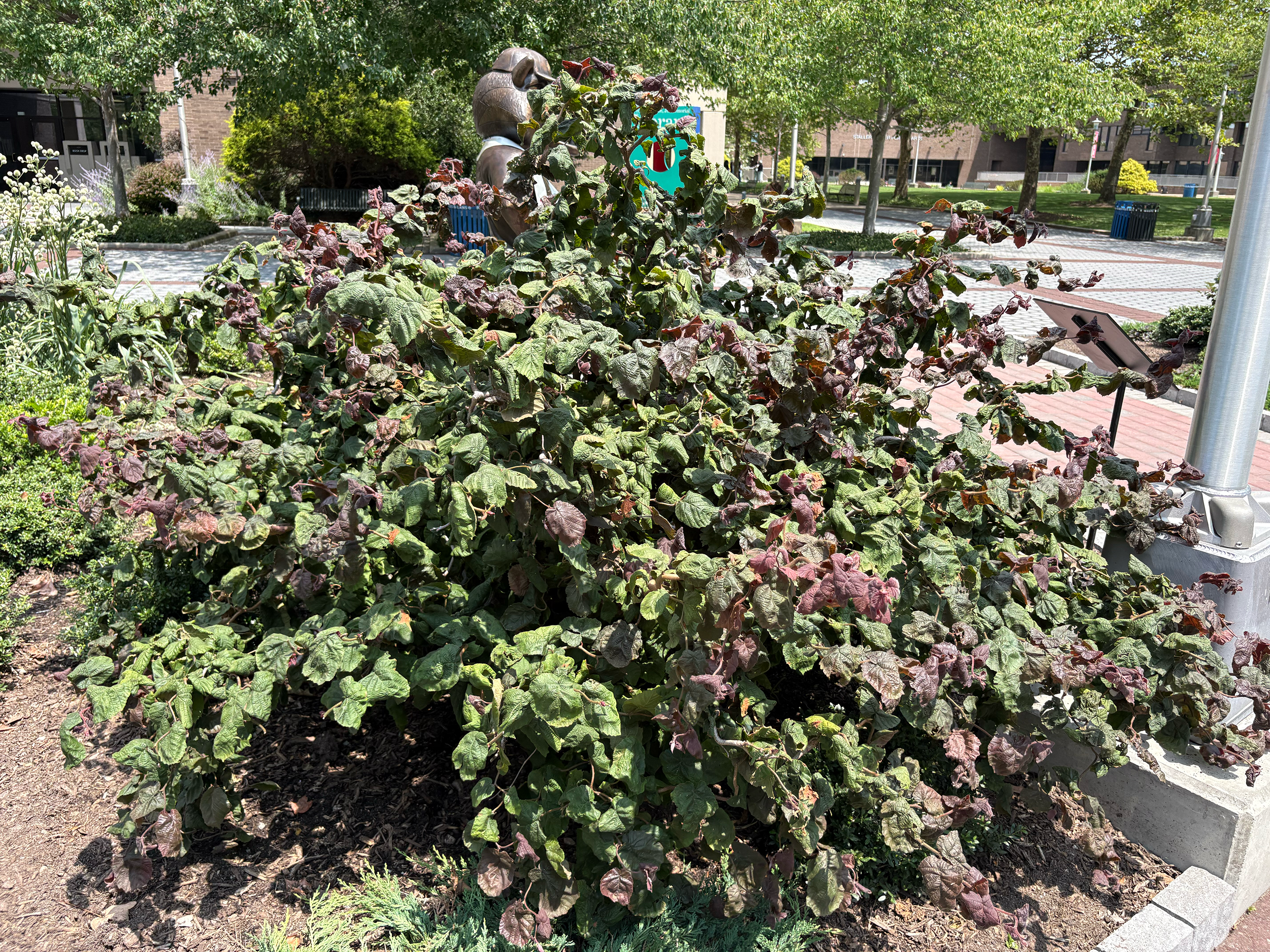


Red Magestic Summer

Red Magestic in Summer


Meet the Tree

'Red Majestic' is a cultivated form of the European Hazel, combining twisted branches with striking purple foliage. In late winter, long yellow catkins dangle from the branches before the leaves emerge, providing one of the earliest signs of spring.

Its compact size makes it an outstanding specimen tree for gardens and arboretums.

Ecological Benefits

Its early catkins provide pollen for bees emerging in late winter, while the dense branching offers shelter for birds. If pollinated, it may also produce edible hazelnuts that are enjoyed by squirrels and other wildlife.

Did You Know?


Even after the leaves fall, the twisting branches create a living sculpture that is often at its most beautiful during winter.

Quick Facts

Native: Cultivar of a species native to Europe and western Asia

Type: Deciduous Tree

Size: 8 to 10 ft tall × 8 to 10 ft wide

Sun: Full Sun to Partial Shade

Water: Moderate

Growth Rate: Slow

Flowers: Yellow catkins in late winter

Fall Color: Burgundy to bronze


Botanical Profile

Family: Betulaceae

Common Names: Red Majestic Contorted Hazel

Genus Meaning: Corylus is the Latin name for hazel.

Species Meaning: avellana refers to Avella, Italy, a region historically known for hazelnuts.


How to Recognize It

Look for these distinctive characteristics:

  • Twisted corkscrew branches
  • Deep burgundy leaves
  • Long yellow catkins
  • Rounded growth habit
  • Edible hazelnuts (when produced)
  • Sculptural winter silhouette

Growing Conditions

Light: Full sun to partial shade

Soil: Well-drained soil

Moisture: Moderate

Hardiness: USDA Zones 4 to 8

Tolerance: Urban conditions and pruning