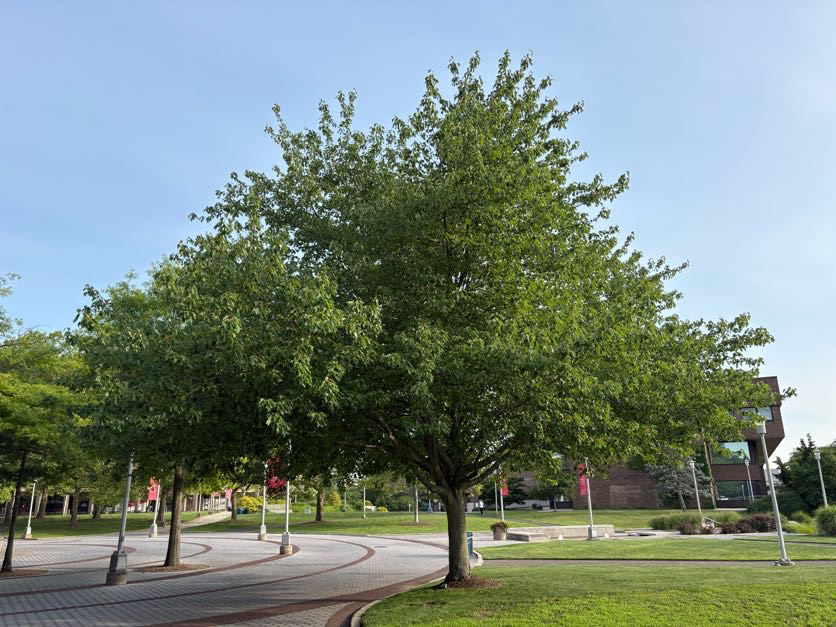
Meet the Tree
Native throughout eastern North America, Red Maple thrives in forests, wetlands, and
suburban landscapes. Its rapid growth and adaptability have made it one of the continent's
most widely planted shade trees.
Spring flowers emerge before the leaves, while brilliant autumn foliage ranges from
golden yellow to deep crimson.
Ecological Benefits
Red Maple supports dozens of native pollinators and provides food and shelter for
birds, mammals, and insects. Its broad canopy offers cooling shade while helping improve
air quality and reduce stormwater runoff.
Quick Facts
Native: Eastern North America
Type: Deciduous Tree
Size: 40 to 70 ft tall × 30 to 50 ft wide
Sun: Full Sun to Partial Shade
Water: Moderate to High
Growth Rate: Medium to Fast
Flowers: Red flowers in early spring
Fall Color: Bright red, orange, or yellow
Botanical Profile
Family: Sapindaceae
Common Names: Red Maple, Swamp Maple
Genus Meaning: Acer means "sharp."
Species Meaning: rubrum means "red."
How to Recognize It
Look for these distinctive characteristics:
- Three- to five-lobed leaves
- Red buds and flowers
- Smooth gray bark on young trees
- Rounded crown
- Brilliant fall color
- Winged samaras
Growing Conditions
Light: Full sun to partial shade
Soil: Moist, adaptable
Moisture: Moderate to wet
Hardiness: USDA Zones 3 to 9
Tolerance: Wet soils, urban environments