


Research Archive
Research Confirms Collective Nature of Quark Soup’s Radial Expansion
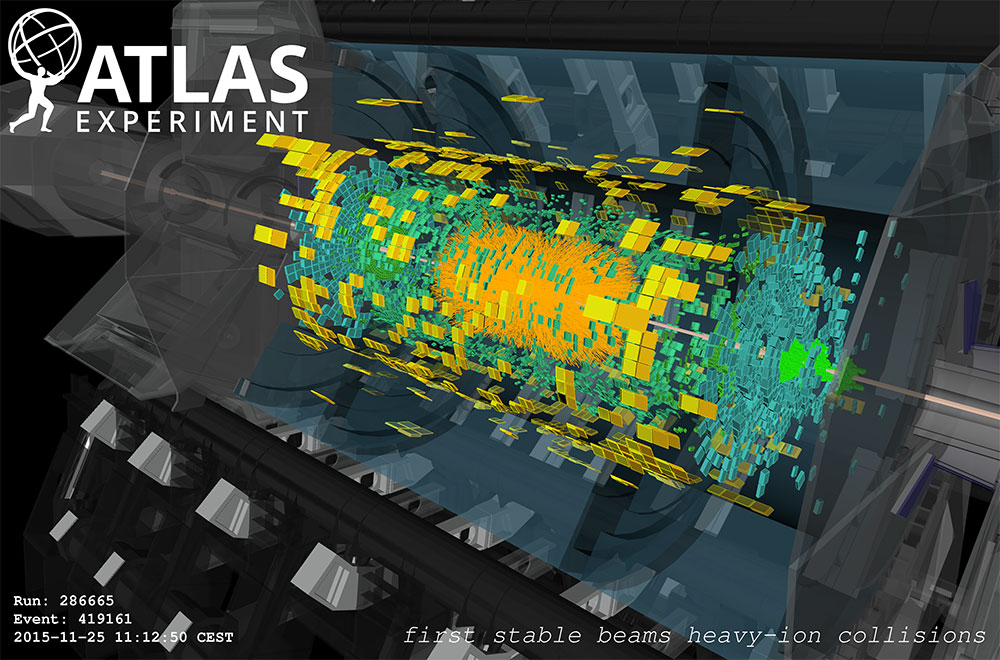
Scientists from the U.S. Department of Energy’s (DOE) Brookhaven National Laboratory and Stony Brook University played leading roles in the analysis of heavy ion collisions at the Large Hadron Collider (LHC) that provide evidence that a pattern of “flow” observed in particles streaming from these collisions reflects those particles’ collective behavior.
The LHC is the world’s most powerful particle collider, located at CERN, the European Organization for Nuclear Research, and the measurements reveal how the distribution of particles is driven by pressure gradients generated by the extreme conditions in these collisions, which mimic what the universe was like just after the Big Bang.
The research is described in a paper published in Physical Review Letters by the ATLAS Collaboration at the LHC.
The international team used data from the LHC’s ATLAS experiment to analyze how particles flow outward in radial directions when two beams of lead ions — lead atoms stripped of their electrons — collide after circulating around the 17-mile circumference of the LHC at close to the speed of light.
“Earlier measurements revealing that particles flow collectively from heavy ion collisions were central to the discovery of the quark-gluon plasma at the Relativistic Heavy Ion Collider (RHIC),” said Jiangyong Jia, a physicist and professor at Stony Brook University and Brookhaven Lab, where RHIC operates as a DOE Office of Science user facility for nuclear physics research. Jia conducts research at both the RHIC and the LHC and led the new ATLAS analysis.
“The new results from ATLAS, while confirming the fluid-like nature of the QGP (quark-gluon plasma), also reveal something new because the type of flow we studied, ‘radial’ flow, has a different geometric origin from the ‘elliptic’ flow studied previously, and it is sensitive to a different type of viscosity in the fluid system,” Jia said.
The findings offer new insight into the nature of the hot, dense matter generated in these collisions, with temperatures more than 250,000 times hotter than the Sun’s core. These extreme conditions essentially melt the protons and neutrons that make up the colliding ions, setting free their innermost building blocks, quarks and gluons, to create a quark-gluon plasma.
Stony Brook Researchers Redefine Capacitor Behavior at the Nanoscale
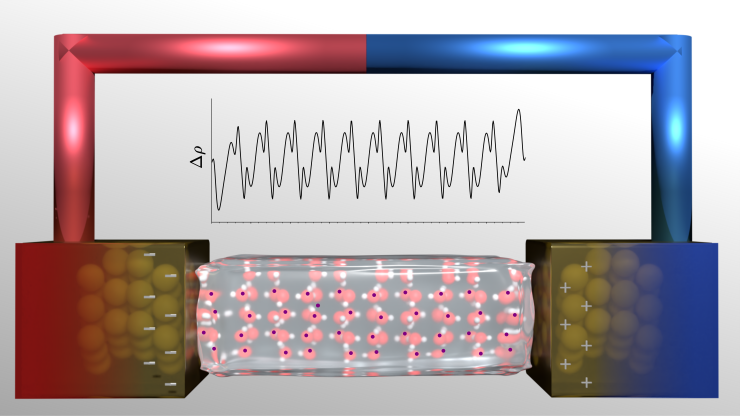
Stony Brook University researchers led a new study published in Physical Review Letters that overturns long-standing assumptions about how capacitors operate when engineered at the nanoscale, offering a clearer scientific foundation for future nanoscale electronic devices.
Capacitors—core components of modern electronics—store electrical charge between metallic electrodes separated by a dielectric material. While their performance is well understood at macroscopic scales, conventional models break down at the nanoscale, where the material properties assumed in standard equations are no longer well defined. These discrepancies pose significant challenges for interpreting the dielectric response of ultrathin materials and for designing reliable nanocapacitors.
To address this problem, the SBU team developed a quantum-mechanical framework that unambiguously separates the contributions of the electrodes and the dielectric. The new protocol establishes fundamental limits on how small a capacitor can be made and provides a reliable approach for evaluating the intrinsic behavior of nanoscale insulating materials.
Demonstrating the method on ultrathin ice, the researchers found that its electronic response to electric fields is essentially indistinguishable from that of bulk ice, despite extreme confinement. The result resolves discrepancies between theoretical predictions and experimental measurements of ice films only a few molecules thick.
“This work offers a pathway to accurately characterize ultrathin dielectric materials using first-principles calculations,” said Ph.D. candidate Anthony Mannino, the study’s lead author. “With a clearer understanding of nanoscale dielectric behavior, we can improve device design and better interpret experimental data.”
The study was led by Mannino, together with fellow Ph.D. candidate Kedarsh Kaushik and visiting student Graciele M. Arvelos, under the direction of Professor Marivi Fernández-Serra at Stony Brook University’s Institute for Advanced Computational Science (IACS), where Mannino is a recipient of the IACS Graduate Fellowship.
Astronomers Sharpen the Universe’s Expansion Rate, Deepening a Cosmic Mystery
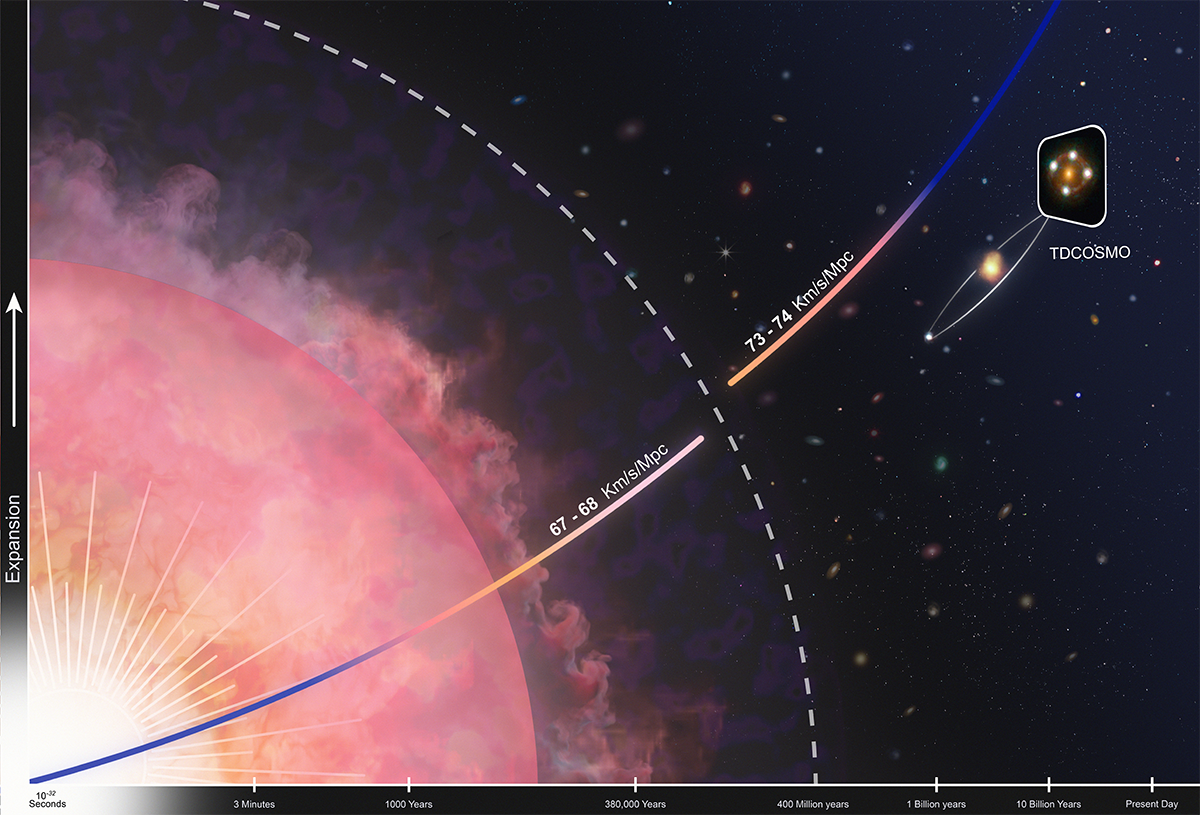
A team of astronomers using a variety of ground and space-based telescopes including the W. M. Keck Observatory on Maunakea, Hawaiʻi Island, have made one of the most precise independent measurements yet of how fast the universe is expanding, further deepening the divide on one of the biggest mysteries in modern cosmology.
Using data gathered from Keck Observatory’s Cosmic Web Imager (KCWI) as well as NASA’s James Webb Space Telescope (JWST), the Hubble Space Telescope (HST) the Very Large Telescope (VLT), and European Organisation for Astronomical Research in the Southern Hemisphere (ESO) researchers have independently confirmed that the universe’s current rate of expansion, known as the Hubble constant (H₀), does not match values predicted from measurements from the universe when it was much younger.
The finding strengthens what scientists call the “Hubble tension,” a cosmic disagreement that may point to new physics governing the universe.
“What many scientists are hoping is that this may be the beginning of a new cosmological model,” said Tommaso Treu, Distinguished Professor of Physics and Astronomy at the University of California Los Angeles and one of the authors of the study published in Astronomy and Astrophysics.
“This is the dream of every physicist. Find something wrong in our understanding so we can discover something new and profound,” added Simon Birrer, Assistant Professor of Physics at the Stony Brook University and one of the corresponding authors of the study.
The team’s measurement currently achieves 4.5% precision — an extraordinary feat, but not yet enough to confirm the discrepancy beyond doubt. The next goal is to refine that precision to better than 1.5%, a level of certainty “probably more precise than most people know how tall they are,” noted Martin Millon, postdoctoral fellow at ETH Zurich and the third corresponding author of the study.
James Webb Space Telescope Looks Within for Dark Matter
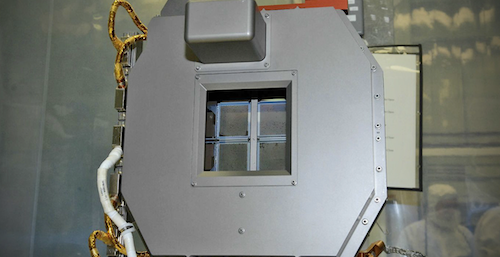
Since its launch in 2021, the JWST has observed not just galaxies at the edge of the visible Universe but also our nearest stellar neighbor, Proxima Centauri. Now Peizhi Du at the University of Science and Technology of China, formerly a postdoctoral researcher at Stony Brook, as well as Stony Brook Professor Rouven Essig and his recent graduate student Hailin Xu, and NASA scientist Bernie Rauscher, have used the JWST to look for objects that are even closer. By analyzing ostensibly blank calibration images, the team sought signs of dark matter within the telescope itself. Finding none, the researchers put constraints on the existence of dark matter that interacts strongly with ordinary matter.
The team considered one proposed type of dark matter that interacts with electrically charged particles. The strength of this interaction is orders of magnitude feebler than that of electromagnetism but is still sufficiently large that it would hinder the particles’ passage through Earth’s atmosphere. Such dark matter is therefore expected to be especially hard to spot using typical ground-based experiments. Instead, space-based instruments offer a promising alternative.
The team analyzed images acquired when JWST’s near-infrared spectrograph was covered. These images were obtained so that researchers could characterize the instrument’s noise. Even so, although the sensor was protected from external photons, pixels could still record cosmic rays and internally generated radiation. Du and colleagues filtered out those events in the hope of finding a residual signal caused by strongly interacting dark matter. The absence of such a signal implies that this form of dark matter contributes no more than 0.4% to the Universe’s total.
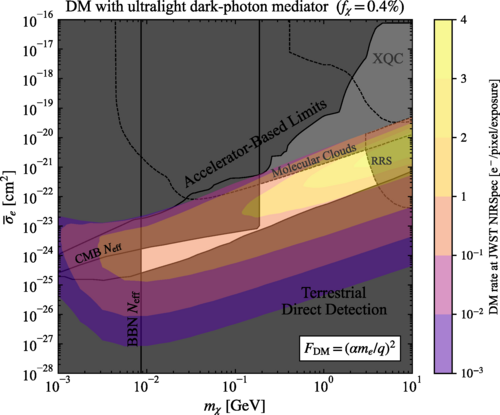
This work was published in PRL, selected as an Editor's Suggestion and featured in Physics.
Stony Brook Simulations Help Explain Lightning’s Mysterious Origins

A recent study in Nature Physics reveals how ordinary ice can generate electricity, providing crucial insight into the origins of lightning. It was discovered that ice exhibits strong flexoelectricity—an electromechanical effect that occurs when the material is bent.
At Stony Brook University, PhD student Anthony Mannino, working under the supervision of Professor Marivi Fernandez-Serra in the Department of Physics & Astronomy and the Core Faculty at the Institute for Advanced Computational Science (IACS), spearheaded the theoretical side of the project.
The international collaboration was led experimentally by Professor Gustau Catalan and Dr. Xin Wen at the Institut Català de Nanociència i Nanotecnologia (ICN2) in Barcelona.
Using the Seawulf supercomputing cluster, Mannino performed large-scale quantum simulations that revealed how the surface of ice can undergo subtle ferroelectric ordering at low temperatures. This ordering amplifies the flexoelectric effect and explains how collisions between ice particles and graupel in thunderclouds can generate the massive charge separations that lead to lightning.
“Helping to facilitate an innovative discovery like the origin of lightning is exciting, extremely rewarding, and very much in keeping with the fundamental role of computation in contemporary science,” said Professor in the Department of Physics and Astronomy and Deputy Director of the Institute for Advanced Computational Science (IACS) Alan Calder. “As this study shows, with the combination of clever investigators and advanced computing the sky, or lightning shooting through it at least, is literally the limit.”
First Physics Results from the sPHENIX Particle Detector
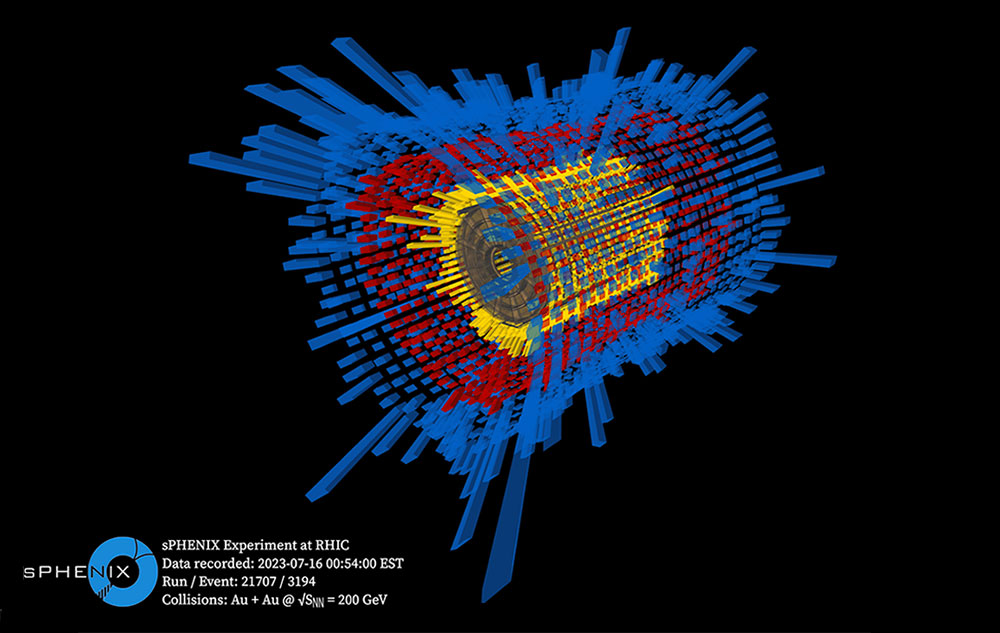
The sPHENIX particle detector, the newest experiment at the Relativistic Heavy Ion Collider (RHIC) at the U.S. Department of Energy’s (DOE) Brookhaven National Laboratory, has released its first physics results: precision measurements of the number and energy density of thousands of particles streaming from collisions of near-light-speed gold ions. As described in two papers recently accepted for publication in Physical Review C and the Journal of High Energy Physics, these measurements lay the foundation for the detector’s detailed exploration of the quark-gluon plasma (QGP), a unique state of matter that existed just microseconds after the Big Bang some 14 billion years ago.
The new measurements reveal that the more head-on the nuclear smashups are, the more charged particles they produce and the more total energy those firework-like sprays of particles carry. That matches nicely with results from other detectors that have tracked QGP-generating collisions at RHIC since 2000, confirming that the new detector is performing as promised.
“As a new and highly sophisticated experiment that has gone through a decade of planning, construction, and commissioning, the first questions we need to ask are: Is the detector operating properly, is our calibration accurate, and are our data-processing pipelines reliable?” said Jin Huang, a physicist at Brookhaven Lab and co-spokesperson for the sPHENIX Collaboration. “The best way to do that is to go through measurements of the fundamental collision properties and confirm that the detector is measuring them properly.”
SBU Physics and Astronomy Faculty and Students Prepare to Measure the Universe
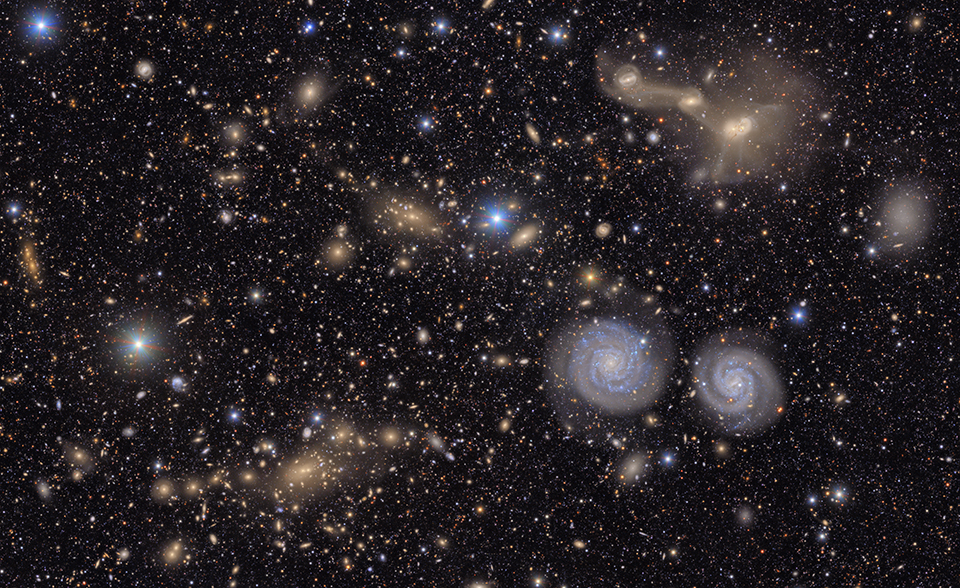
Stony Brook University professors — along with post-doctoral, graduate and undergraduate students — from the Department of Physics and Astronomy are preparing to measure the Universe with the newly constructed National Science Foundation (NSF)-Department of Energy (DOE) Vera C. Rubin Observatory in Chile.
Located on the El Peñón peak of Cerro Pachón in the Andes Mountains in Chile, the Rubin Observatory revealed the first set of large, ultra-high-definition images and videos on June 23, showcasing its extraordinary capabilities to the world for the first time at a “First Look Event” in Washington, D.C. Stony Brook researchers celebrated with their colleagues worldwide by hosting a “First Look Watch Party.”
“The known part of our Universe comprises only ~5% of the Universe,” said Chang Kee Jung, distinguished professor and chair of the Department of Physics and Astronomy in the College of Arts and Sciences. “The other part is composed of ‘Dark Energy’ and ‘Dark Matter,’ which we still know little about. The newly constructed Rubin Observatory will provide unprecedented data that will help us to greatly advance our understanding of the Universe. As a particle physicist myself, I have a keen interest in this magnificent telescope, not only for its fundamental science goals but also for its technology and participation of a large number of particle physicists in the project. The Stony Brook faculty members, postdocs and students have made significant contributions to the project. I am eager to see the stunning initial images and looking forward to seeing breakthrough findings from this interdisciplinary and mega-science project.”
NASA's Roman to Peer Into Cosmic 'Lenses' to Better Define Dark Matter
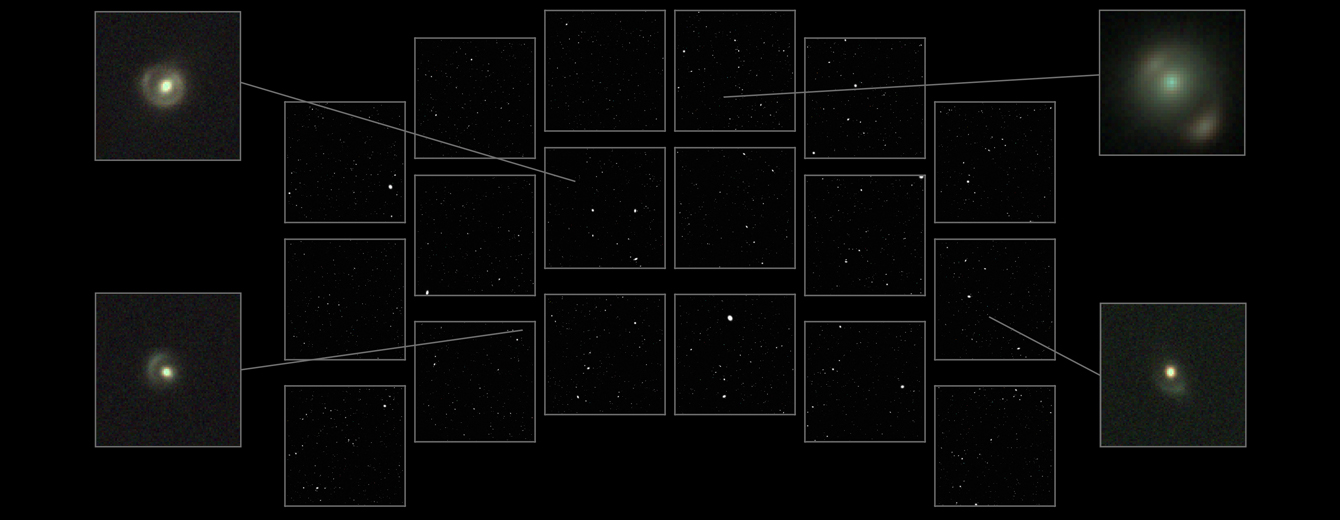
A funky effect Einstein predicted, known as gravitational lensing — when a foreground galaxy magnifies more distant galaxies behind it — will soon become common when NASA’s Nancy Grace Roman Space Telescope begins science operations in 2027 and produces vast surveys of the cosmos.
A particular subset of gravitational lenses, known as strong lenses, is the focus of a new paper published in the Astrophysical Journal coauthored by Simon Birrer, an assistant professor at Stony Brook University. The research team has calculated that over 160,000 gravitational lenses, including hundreds suitable for this study, are expected to pop up in Roman’s vast images. Each Roman image will be 200 times larger than infrared snapshots from NASA’s Hubble Space Telescope, and its upcoming “wealth” of lenses will vastly outpace the hundreds studied by Hubble to date.
Roman will conduct three core surveys, providing expansive views of the universe. This science team’s work is based on a previous version of Roman’s now fully defined High-Latitude Wide-Area Survey. The researchers are working on a follow-up paper that will align with the final survey’s specifications to fully support the research community.
Gravitational lenses are made up of at least two cosmic objects. In some cases, a single foreground galaxy has enough mass to act like a lens, magnifying a galaxy that is almost perfectly behind it. Light from the background galaxy curves around the foreground galaxy along more than one path, appearing in observations as warped arcs and crescents. Of the 160,000 lensed galaxies Roman may identify, the team expects to narrow that down to about 500 that are suitable for studying the structure of dark matter at scales smaller than those galaxies.
“Once Roman’s images are in hand, the researchers will combine them with complementary visible light images from Euclid, Rubin and Hubble to maximize what’s known about these galaxies,” Prof. Birrer said.
PRL Editor's Choice: Entanglement as a Probe of Hadronization
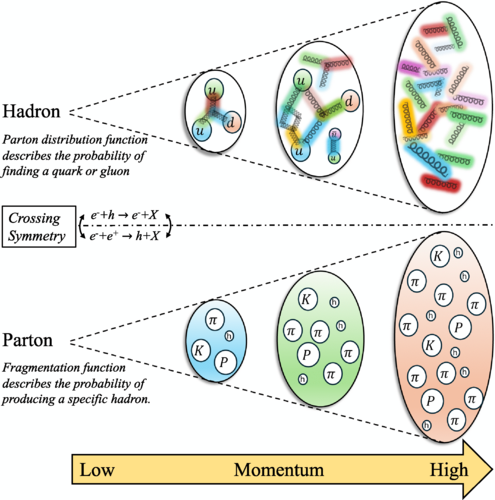
A recent publication in Physical Review Letters, by scientists at Stony Brook University and Brookhaven National Lab, was selected as an Editor's Choice. The work was done by Research Scientist Jaydeep Datta, Distinguished Professors Abhay Deshpande and Dimitri Kharzeev, Post Doctoral Fellow Charles Joseph Naïm, and Adjunct Associate Professor Zhoudunming Tu.
Previous work had discovered that the proton structure at high energies exhibits maximal entanglement, leading to a simple relation between the proton’s parton distributions and the entropy of hadrons produced in high-energy inelastic interactions, which has been experimentally confirmed.
In this work, the authors extended this approach to the production of jets, where the maximal entanglement predicts a relation between the jet fragmentation function and the entropy of hadrons produced in jet fragmentation. This relation was tested using the ATLAS Collaboration data on jet production at the Large Hadron Collider, and there was good agreement between the prediction based on maximal entanglement within the jet and the data.
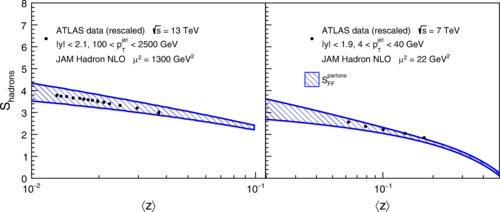
This study represents the first use of a quantum entanglement framework in an experimental study of the hadronization process, offering a new perspective on the transition from perturbative to nonperturbative QCD. These results open the door to a more comprehensive understanding of the quantum nature of hadronization.
Clearest and Most Precise Images of the Universe’s Infancy Revealed
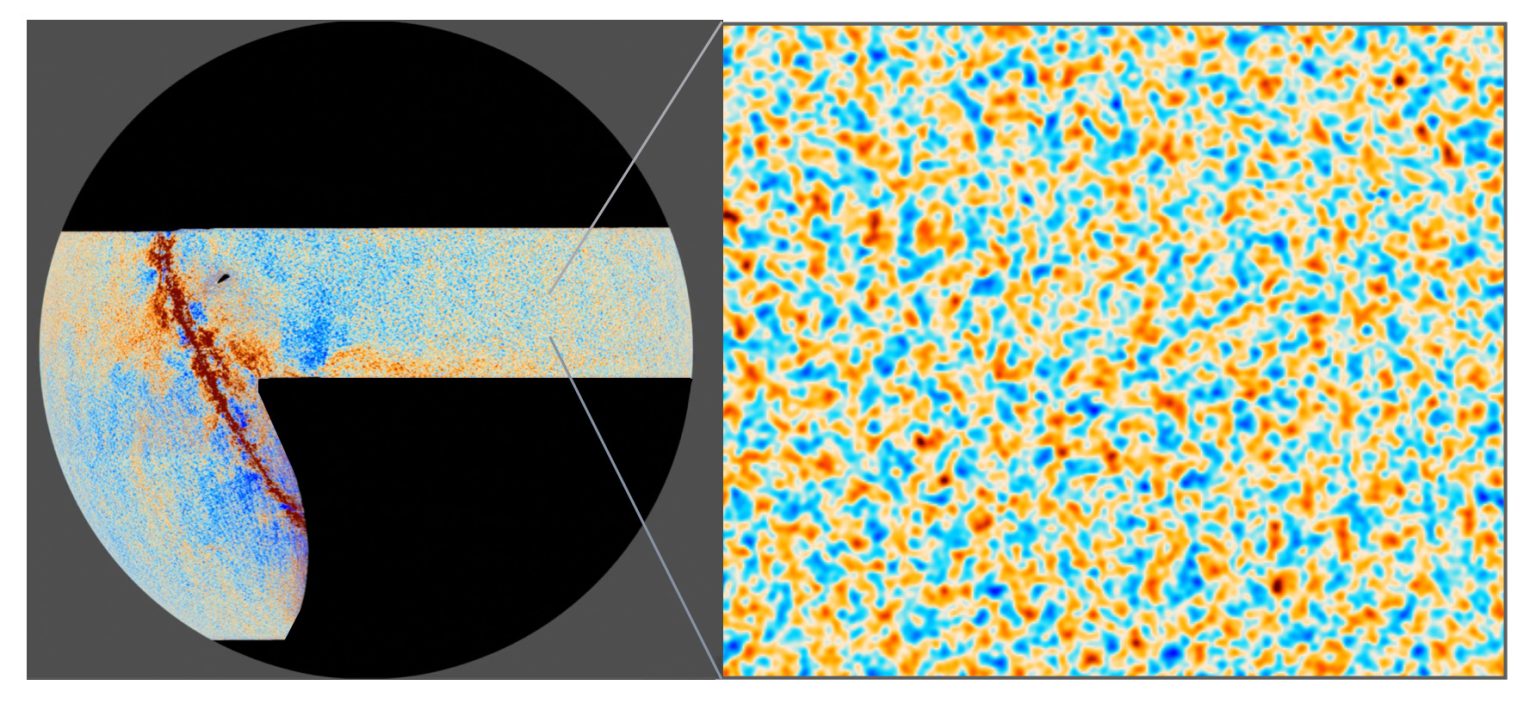
Research by the Atacama Cosmology Telescope (ACT) collaboration has produced new images that are the clearest yet of the universe’s infancy – the earliest cosmic time accessible; the images are of the cosmic microwave background (CMB) radiation that was visible only 380,000 years after the Big Bang.
The international collaboration of scientists includes astrophysicist Neelima Sehgal, PhD, and her group in the Department of Physics and Astronomy in the College of Arts and Sciences at Stony Brook University. The Stony Brook team has played an essential role within the collaboration in analyzing the CMB, the afterglow light from the Big Bang.
The new images measure light that traveled for more than 13 billion years to reach the ACT high in the Chilean Andes and reveal the universe at about 380,000 years old, which the team considers the equivalent of hours-old baby pictures of the cosmos, now in about middle-age.
“We are seeing the first steps towards making the earliest stars and galaxies,” says Suzanne Staggs, Director of ACT and Henry deWolf Smyth Professor of Physics at Princeton University. “And we’re not just seeing light and dark, we’re seeing the polarization of light in high resolution. That is a defining factor distinguishing ACT from Planck and other, earlier telescopes.”
The research team says these results confirm a simple model of the universe and have ruled out most competing alternatives. The new images of the CMB add higher definition to those observed a decade ago by the Planck space-based telescope. Their findings were presented at the American Physical Society Annual Meeting on March 19.
High-Voltage Gun Accelerates Electrons from Zero to 80 … Percent the Speed of Light
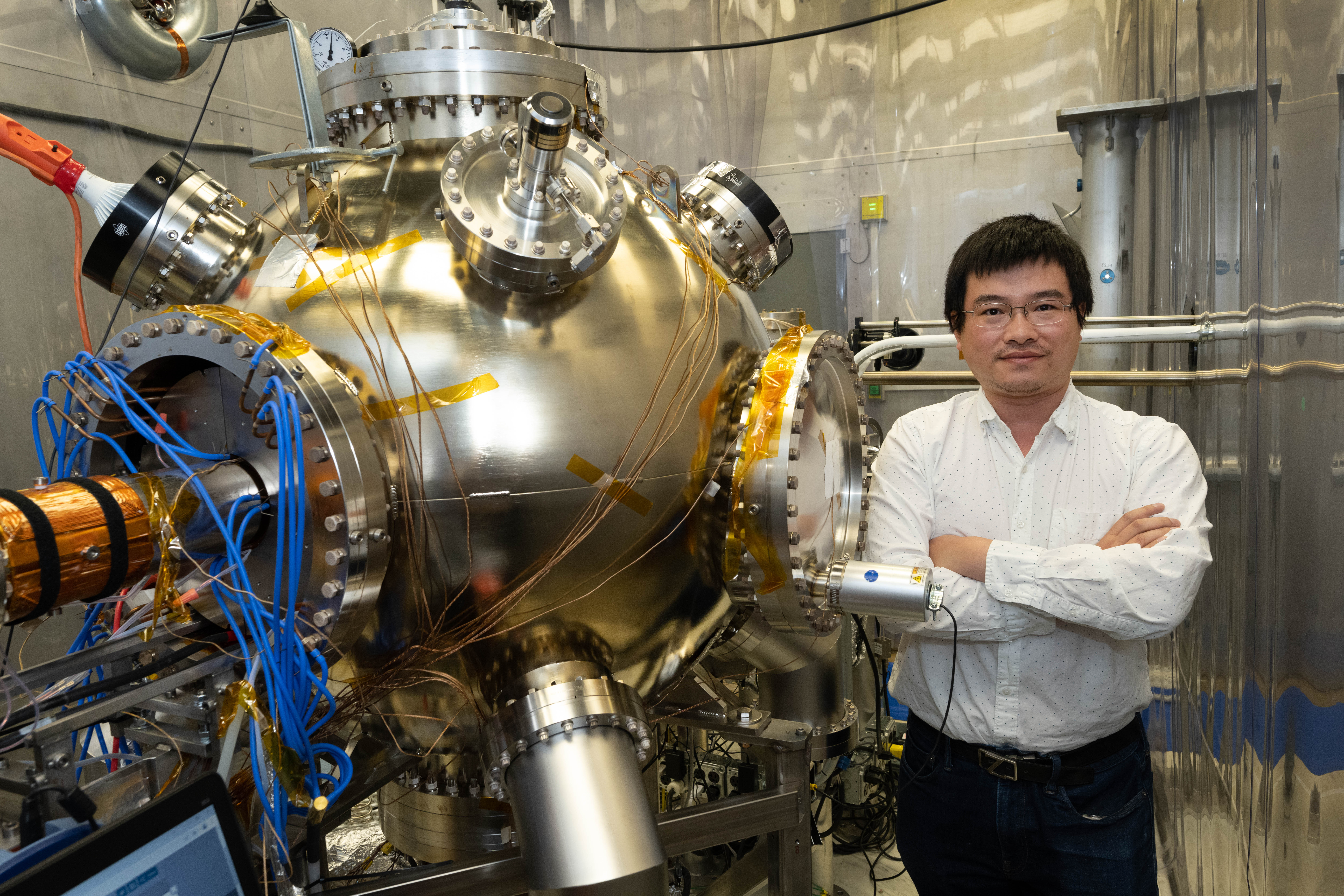
Scientists at the U.S. Department of Energy’s (DOE) Brookhaven National Laboratory have designed and tested the world’s highest voltage polarized electron gun, a key piece of technology needed for building the world’s first fully polarized Electron-Ion Collider (EIC). The EIC, a state-of-the-art nuclear physics facility being built at Brookhaven in partnership with DOE’s Thomas Jefferson National Accelerator Facility (Jefferson Lab), will accelerate and collide polarized electrons with polarized protons and ions — atoms stripped of their electrons — so scientists can investigate the innermost building blocks of visible matter.
“This gun not only exceeds the EIC requirements, but we also get world-leading results,” said Brookhaven Lab physicist Erdong Wang, the chief architect and implementor of the device.
Wang proposed the electron gun as a research and development project back in 2017 and has been spearheading its design, engineering, assembly, and testing ever since. Much of the work and all the testing were done at Stony Brook University (SBU), a partner in Brookhaven Science Associates, the entity that manages Brookhaven Lab on behalf of DOE. The project drew on the expertise of scientific and technical staff and graduate students there and at several EIC collaborating institutions, including Jefferson Lab, Old Dominion University, and others.
EIC Science Director Abhay Deshpande, a professor of physics at SBU who is also serving as Brookhaven Lab’s interim associate laboratory director for Nuclear and Particle Physics, said, “This project is a great example of the strong collaboration between Brookhaven Lab and Stony Brook, particularly for research in nuclear physics and the development of technologies needed for the EIC.”
Nature Chemistry: Collisional Alignment and Molecular Rotation Control the Chemi-ionization
of Individual Conformers of Hydroquinone with Metastable Neon
A newly published review article has recently been published in Nature Chemistry coauthored by Dr. Jesus Pérez-Ríos! In this work, Dr. Pérez-Ríos and his collaborators
focus on a central tenet in chemistry: the relationship between the shape of a molecule
and its chemical reactivity.
Chemi-ionization (CI) reactions are important in plasmas, planetary atmospheres and interstellar space, reactive collisions with quantum effects, and other energetic environments. In this study, the authors deployed an experiment utilizing electrostatic deflection to separate individual conformers of 1,4-dihydroxybenzene (hydroquinone, HYQ) within a molecular beam. These conformers differ by a single bond rotation (as shown in the figure below), which leads to different dipole moments. These are intersected with another beam containing metastable neon atoms in the excited (2p)5(3s)13P2,0 states (Ne* ) that ionize the molecular collision partner.
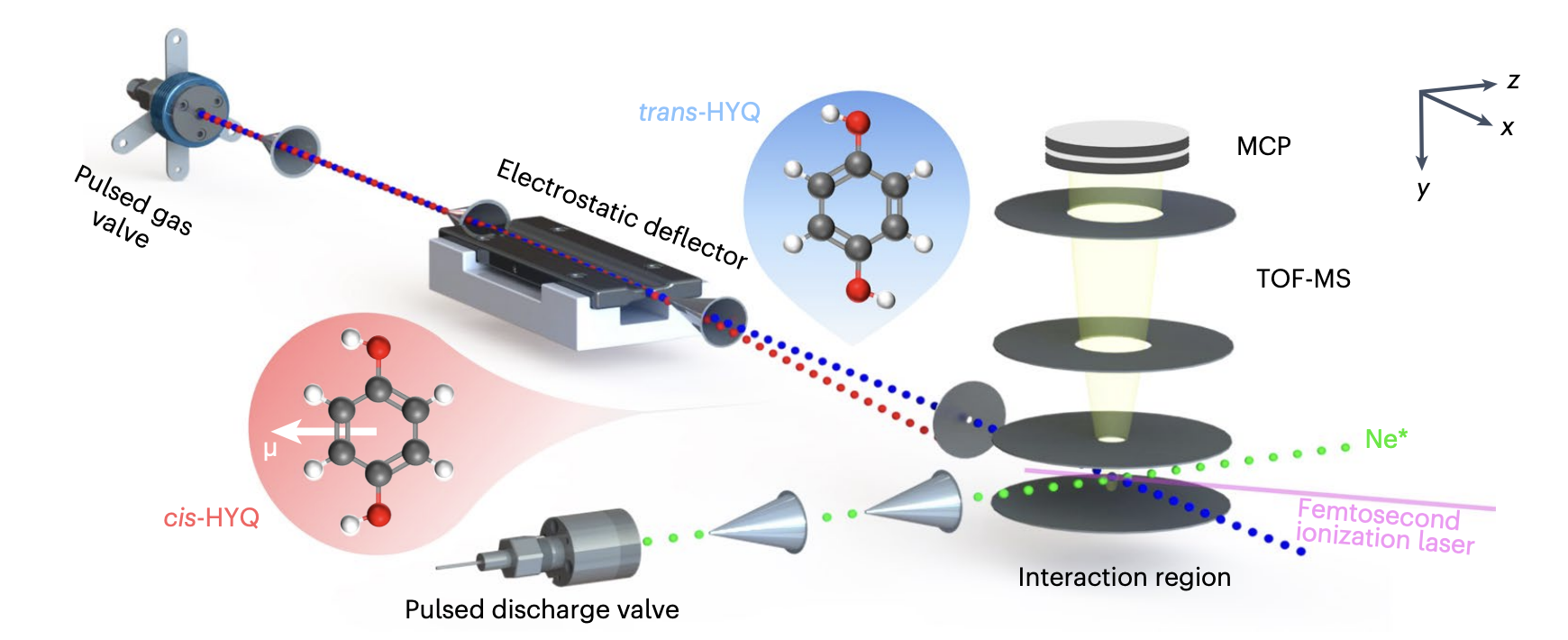
Schematic of the setup and geometries of the polar cis- and apolar trans-HYQ. Differences
in effective dipole moment between the two conformers lead to spatial separation after
passing through the electrostatic deflector.
Spatial separation of the two conformers allows independent analysis of the reactions of each conformer with Ne*. Conformational effects are typically associated with stereodynamics, but that does not necessarily paint the entire picture. Rotational dynamics can also be at play to counter orienting forces. The authors explore the interrelationship between molecular geometry, chemical steering forces and molecular rotation governing CI reactions of specific molecular conformations.
The published paper in Nature Chemistry can be found here..
Nature Astronomy: Free-floating Binary Planets from Ejections During Close Stellar
Encounters
Exoplanets -- planets beyond our solar system -- have been found in increasing amounts
over the years as our telescope techonology continues to improve. However, a number
of exoplanets about the same size of Jupiter have been found in pairs, floating together
through space with no host star to orbit around. These types of systems have been
dubbed JuMBOs, or Jupiter-Mass Binary Objects. Recently, Dr. Rosalba Perna and collaborators
have developed a theory to help explain the mysterious prevalence of the JuMBOs scattered
throughout the galaxy!
The key of this new theory lies in close fly-bys between two stars. One star is host
to the two Jupiter-size exoplanets, and when the second star gets close enough, the
two planets can be exected out of their original host star's influence. The two planets,
orbiting a star with mass M1, are initially regular orbiting bodies. When a second, interloper star passes close
enough to the original star, the two planets can be given enough kinetic energy to
be ejected from their home system. Then, without the gravity of a star around which
to orbit, these two planets begin to orbit around their own center of mass.
A sketch method through which JuMBOs are produced. On the left, we see the schematic
of the mechanism developed. Host star M1 has the two Jupiter-size exoplanets, marked by the blue dots. A fly-by of star M2 then causes these planets to be ejected out of the system together. The diagram on
the right shows the various variables needed to work out the theory's mathematical
details, such as the various orbit angles and the interloping star's velocity.
Dr. Perna and her collaborators were able to determine the relevant parameters needed to describe the formation of these JuMBOs, as well as the values these parameters need to be to predict when these binary systems will form. With N-body simulations, a common tool to investigate orbital properties for cosmic bodies, the scientists were able to conclude that these fly-by ejected JuMBOs occur relatively frequently in stellar clusters. These clusters have multiple stars that are gravitationally bound, and if any of those stars have planetary systems then the probability that the loosely-bound planets at the edge of these systems are ejected is quite significant. When two of these outer planets are at points in their orbits that are close together, they can then be ejected together, creating a JuMBO.
The published paper in Nature Astronomy can be found here, and the journal issue for which this article is the cover may be found here.
Nature Physics: Ultracold Chemistry as a Testbed for Few-body Physics
Dr. Jesus Pérez-Ríos and collaborators have recently published a new review article
in Nature Physics! With it, they seek to give insight into how cold systems with only a few particles
can serve as a unique tool to explore chemistry in these environments!
The potential of these systems span a broad range of interesting applications, from
quantum computing to highly detailed study of chemical reactions. For example, ultracold
studies provide access to behaviors at a quantum mechanical level, allowing researchers
the ability to carefully prepare the molecules to control their chemical behaviors
and reactivities! With temperatures as low as a few microkelvin (less than -400 °F),
these molecules are incredibly cold. However, the interactions that they participate
in can have energies thousands of times larger than that!
A diagram depicting the relevant energy scales and distances for these ultracold interactions.
a) A zoomed in view of the peak, showing how close the various rotational and vibrational
energy states are separated. b) Energy interactions on a longer distance scale, showing
that the overall large-scale interactions have behaviors more aligned with the small
scale energy differences, as opposed to the short-scale strong interactions.
It turns out, however, that the interplay between these long-range and short-range interaction scales is important -- so much so that controlling the strength of the long-range interactions allows scientists to control how these molecules will collide! At the temperatures scientists would typically study these systems, the study of these collisions mostly gives insight into final product molecules after the collision. But at these temperatures, and with the fine-tuning they allow, scientists can study intermediate steps along the reaction in greater detail.
The paper in Nature Physics can be found here.
Cover Article: Instrumental uncertainties in radiative corrections for the MUSE experiment
Dr. Bernauer, an assistant professor in our department, along with collaborators,
have published a paper in the EPJA that has been selected as the cover article, increasing the visibility of this important
work!
A sketch of the MUSE experimental set-up at the Paul Scherrer Institute in Switzerland.
The MUon proton Scattering Experiment (MUSE) based in Switzerland has made significant headway in accurately measuring the size of protons -- positively charged particles at the heart of any atom. The MUSE experiment measures the proton radius through scattering muons -- particles that behave almost like electrons, except that they are almost 200 times heavier!
The particle beam the MUSE experiment uses for its scattering measurements contains a mix of electrons, muons, and pions, a different type of subatomic particle. The incident particles bass through various detectors for timing measurements and to identify which particles are which. They then collide with the target and scatter. The distribution of the scattering particles gives us information about the size of the target particles -- namely, the size of the proton!
The article published by Dr. Bernauer's group and collaborators investigates the uncertainty in the experimental measurements arising from radiative corrections to the cross section of the proton (a measure of its size). This correction factor accounts for higher-order effects typically neglected in simple calculations. One such source for radiative correction comes from a process known as bremsstrahlung -- or "braking radiation" that is emitted when the incident particles are deflected by the target particles. The article shows that the uncertainties in resulting measurements from electron scattering are less than 1%, while for those involving muons they are negligible -- heavier incident particles are deflected less, and so contribute less of these radiative corrections.
The published article may be found here (link to the published article), and the journal issue for which this article is the cover may be found here (link to the journal issue).
Visualizing Quantum Particles at the Sub-nanometer Scale
A recent work, spearheaded by members of our Physics and Astronomy department with
collaborators from Columbia University and UC San Diego, unveiled a new tool that
can image quantum particles. The particles, called Dirac magnetoexcitons (DiMEs),
were seen at infrared frequencies for the first time!
Magneto infrared optics now goes nano. Credit: Michael Dapolito, Xinzhong Chen, Mengkun
Liu
The new imaging tool combines a cryogenic scattering-type scanning near-field optical microscopy (SNOM) with high magnetic fields. The SNOM technique is commonly used to study quantum particles smaller than the diffraction limit of light. However, to fully probe the properties of these particles, researchers needed to cool the microscopes to cryogenic temperatures and operate them under strong magnetic fields.
"Electrons in a magnetic field do strange things that we haven’t seen before, because
the resolution of existing tools that are compatible with magnetic fields hasn’t been
good enough. These results should be the first of many with this monumental new tool."
-- Dmitri Basov, co-author
The image above, published in the article in Nature, depicts the appearance of the interesting quantum phenomena at high magnetic fields -- here, at a strength of 7 Tesla. For reference, the strength of Earth's magnetic field that we experience daily is only a few tens of micro-Tesla in strength.
The paper, published in Nature, may be found here (link to the published paper). A highlight article published by Columbia may be read here (link to the highlight article).
Proton "Spin Crisis" Solved at BNL's RHIC
Former department graduate student Zhongling Ji, advised by Dr. Deshpande, was fundamental
in this resolution. Measurements at the Relativistic Heavy Ion Collider (RHIC) at
Brookhaven National Laboratory (BNL) carried out by Dr. Ji were the key to solving
this "crisis."
The problem of how much a proton's quarks contribute to its spin has been around since
1987. At that time, experiments at CERN found that the spin of the proton's internal quarks couldn't account for the full
spin of the proton itself -- igniting the so-called "spin crisis."
Zhongling Ji (left) and Abhay Deshpande (right) at Dr. Ji's thesis defense.
To find the missing spin, researchers began looking at the photons produced by interactions between quarks and gluons in proton collisions.
"...one of the major obstacles in this analysis is effectively removing the considerable
background of photons that come from the decay of other particles produced in RHIC's
collisions,"
-- Zhongling Ji
The data from 2013 analyzed for the paper corresponds to about 5.4 trillion proton-proton collisions. Researchers relied on dedicated simulations to determine frequencies of photon creations from other sources to remove them from the data in a systematic way, leaving behind only events relevant to the problem at hand.
The paper, published in PRL, may be found here (link to the published paper). A press release from BNL about the discovery may be read here (link to the BNL press release), and one from Stony Brook University may be read here (link to the Stony Brook press release).
Editors' Suggestion: Bilayer Graphene Allows for Highly Tunable Setups
Dr. Ghorashi, a postdoc in Dr. Jen Cano's group, along with collaborating professor
Dr. Xu Du and graduate students Aaron Dunbrack and Jiacheng Sun, have published a
paper in PRL that has been selected as an Editors' Suggestion. Being selected for this honor highlights
the submission's particular importance, innovation, and broad appeal.
(a) The proposed experimental setup of the various materials needed to tune the displacement
field (b) Schematic phase diagram showing the stacked and topological flat bands
The research is focused on objects called Moiré heterostructures. In recent years, these materials have attracted wide interest due to their many interesting properties driven by the behavior of the electrons within -- from superconductivity to various forms of insulation to a crystalline form of electrons called a Wigner crystal.
These interesting behaviors are emergent phenomena resulting from "flat bands" that describe the energy state of the electrons. The novel structure proposed in the article makes achieving these flat bands easier, for better study of a variety of phenomena.
These results motivate further experimental of bilayer graphene in similar structures for fine-tuned control over the resulting physics. The possibility of superconducting phases (known to exist in twisted bilayer graphene) that can be controlled is of interest for many fields, as well as industrial purposes.
The published article may be found here (link to the published article).
Reappearing Supernova Allows First-of-its-Kind Measurement of Universe's Expansion Rate
Drs. Birrer and von der Linden and international collaborators have successfully used
a first-of-its-kind technique to measure the expansion rate of the Universe. Their
data provides insight into a longstanding debate in the field and could help scientists
more accurately determine the Universe’s age and better understand the cosmos.
An image from the paper, showing (A) movement of the host galaxy and supernova over time and (B) the four images taken in 2014 (S1-4) and the reappearance in 2015 (SX).
"The prediction and subsequent observation of the fifth image of Supernova Refsdal
was a great success of our cosmological model based on General Relativity and the
mysterious dark matter, ... yielding a precise measurement of the Hubble constant
from a lensed supernova - this supernova just keeps on giving!"
- Dr. von der Linden
The measurement yields a result consistent with predictions based on the cosmic microwave
background (CMB), and will help in contributing to settle disagreements between different
measurement methods giving different values for the Hubble constant -- a constant
that helps describes how our universe is expanding.
"The measurement of the expansion rate of the Universe is a rollercoaster. While a
few years ago, most strong lensing measurements yielded higher values in tension with
the cosmic microwave background estimates, more recent measurements and revised methodology
has resulted in lower values. This study does not provide the last word, but corroborates
a trend."
- Dr. Birrer
In 2014, the supernova was discovered and multiply imaged (the same supernova was captured appearing four times in a single frame). Gravitational lensing caused by a galaxy cluster bent and magnified the light to appear in the shape of an Einstein cross. By predicting the location of the next image of the supernova and capturing it again, the researchers were able use a theory developed in the 60s that had previously been impossible to use without these specific occurences.
The paper, published in Science, may be found here (link to the published paper).
Zooming In: Gravitational Lensing Maps Dark Matter Across the Sky
A newly published image reveals the most detailed map of dark matter across almost
25% of the sky! The Atacama Cosmology Telescope (ACT) collaboration, co-lead by our
own Dr. Neelima Sehgal, uses gravitational lensing -- a technique measuring the bending
of light around a heavy object -- to make the map.
A figure from the published paper, showing the dark matter map as it would look on the sky above Earth.
"This ACT result showcases the precision that can be obtained with measurements of
the gravitational lensing of the microwave background, as well as the promise of future
more sensitive CMB experiments in terms of furthering our understanding of the physics
of the Universe."
- Dr. Sehgal
Dark matter makes up more than 80% of the matter content of the universe, yet is still
poorly understood. These new results might offer insight into new ways to further
study dark matter and unlock its mysteries.
A figure from the published paper, showing the area covered in the survey (red) along with areas covered by other ongoing
galaxy surveys. The survey colors are superimposed on a dust map image from the Planck
Collaboration et al. 2016b.
The ACT used gravitational lensing measurements of the cosmic microwave background (CMB) radiation -- light leftover from close to the very beginning of the universe -- to construct the highly detailed map. The survey used four whole years of data gathered by the telescope, and covers approximately 23% of the sky.
A report published by the university about the new image may be read here (link to the university report). The paper containing the image may currently be read here (link to the paper).
Colliding Gold Atoms Supports Universal Scaling Law, PHENIX Group Receives Editor's Choice
The PHENIX (Pioneering High Energy Nuclear Interaction eXperiment) collaboration has
yielded insights into the behavior of photon production. Using the Relativistic Heavy
Ion Collider (RHIC) at Brookhaven National Lab, gold atoms were slammed into each
other to measure how many photons were produced.
An animation depicting a simplified view of how the RHIC functions. A brief depiction
of the PHENIX experiment can be seen starting at 1:00. Brookhaven National Lab, RHIC.
The experiment discovered evidence of a universal scaling law: the photons generated by these collisions behave similarly regardless of how fast the gold atoms were moving before the collision!
The figure above demonstrates the experimental results. The fit seeks to find an accurate value for the scaling relation (the value along the y-axis) as a function of the momentum along directions perpendicular to the collision motion (x-axis). The agreement between two collisions with different energy is evidence for the universality of the relation -- the same behavior for the produced photons is seen regardless of how energetic the collision is.
The article, selected to be an Editor's Suggestion, was published in the journal Physical Review C, and can be found here (link to the full article).
Perez-Rios Research Selected for the 2022 JCP Emerging Investigators Special Collection
The Journal of Chemical Physics (JCP) Emerging Investigators Special Collection is a special issue dedicated to young
investigators in the field of chemical physics, and very few works are accepted as
part of this annual special issue.
A depiction of the interactions between three bodies (left), and their corresponding
representation in a coordinate system that makes the problem more tractable. [Source, Journal of Chemical Physics].
The selected study focuses on three-body interactions, and in particular seeks to
characterize the behavior of interactions of two neutral atoms and a charged atom.
These types of processes, summarized by the reactions
A + A + B+ → A2 + B+
A + A + B+ → A + AB+
are critically important in a variety of different disciplines, from chemical physics to astrophysics.
The research depends on a mapping of the problem in regular coordinates to hyperspherical coordinates. Working with specific coordinates allows one to transfer the 3-body collisions in 3D space (a problem with 18 variables - each particle's x, y, andz coordinates as well as its momentum in these three directions) to a space with only 6 variables.
The published article may be found here (link to the article). To read more about the Emerging Investigators Special Collection, read here (more on the Emerging Investigators Special Collection).
Cano and Collaborators Create Framework to Design Topological Materials
Dr. Cano and collaborators worldwide have developed a method that predicts whether metallic materials are likely to have the kinds of strong electron interactions that lead to topological states.
A figure from the published paper, detailing the design process (a, b), the strengths of potential materials (c), and characteristics of the first created material (d, e).
"Since we developed the theory of topological quantum chemistry, it has been a longstanding
goal to apply the formalism to strongly correlated materials. Our work is the first
step in that direction."
- Dr. Cano
The framework's development used a key feature of crystalline structures: symmetry. Using symmetry arguments, certain behaviors can be deduced without resorting to expensive calculations.
"What we postulated was that strongly correlated excitations are still subject to symmetry
requirements. Because of that, I can say a lot about the topology of a system without
resorting to ab initio calculations that are often required but are particularly challenging
for studying strongly correlated materials."
- Dr. Si, collaborator
An interview article published by the university may be found here (link to the interview article). The article, published online in Nature Physics, may be found here (link to the article).
Light from a Supermassive Black Hole's Shadow: Star Formation at the Galactic Center
The mystery of young stars forming at the center of the Milky Way has long been a conundrum to astronomers. The intense gravity of the region should disrupt star formation, but a novel mechanism, published by Professor Rosalba Perna and a collaborator, explains their presence.
Stars at the galactic center rapidly orbiting around Sagittarius A*, our galaxy's supermassive black hole. By ESO/MPE.
Ironically, this mechanism for the new stars formation depends on another star falling
into the black hole and releasing a huge explosion, called a tidal disruption event.
"We know that explosive events have a feedback effect on star formation in other contexts. As we were looking into the details of it here, all the numbers in terms of rates, energetics, length scales, they all just fell into place.”"
- Dr. Perna
The mechanism relies on a jet of material from the exploding star to be released into the surroundings. This jet (red) compresses the gas ahead of it as it leaves the area of the exploding star, which allows for clumps of gas to eventually begin star formation. Additionally, the perpendicular expansion of the jet compresses gas in other directions, allowing for more star formation.
The article, chosen as a highlight of the Astrophysical Journal Letters and also highlighted in the NewScientist Magazine, may be found here (link to the full article).
Gamma Rays and Gravitational Waves Lead to Solution of Astrophysical Puzzle, Award for Rosalba Perna
Observations of gamma-ray bursts and gravitational waves from colliding neutron stars
has led to a solution to a long-standing puzzle in astrophysics, as well as the 2022 Aspen Institute Italia Award for Dr. Rosalba Perna and her collaborators.
NASA's visual interpretation of the two neutron stars colliding, emitting gravitational
waves during the collision and a gamma-ray burst after impact.
The study, published in 2018, looks at the binary neutron star merger labeled GW170817
to determine why the detected gamma-ray pulse was not as bright as expected. The authors
developed models to predict what an observer should expect to see at various locations
with respect to the collision and gamma-ray burst, and these models strongly suggest
that short gamma-ray bursts can be produced in these types of mergers.
The models showed that structured emission jets from the collision can produce light curves that grow brighter and dim over time, as was observed with the GW170817 collision -- and what had initially cast doubt on the association between the merger and the gamma-ray burst. With this study, the link between the two is more concrete and will allow astronomers to look for similar events more closely in the future.
The published article may be found here (link to the published article).
Evan Trommer, Physics Senior, URECA Researcher of the Month
Evan Trommer is a senior majoring in physics and mathematics who has been exploring experimental plasma physics under the mentorship of Dr. Navid Vafaei-Najafabadi (Physics & Astronomy). Evan participated in the 2022 URECA summer program, and presented a poster on “Probing the Electromagnetic Field Structure in Plasma Wakefields Using Relativistic Electrons” at the Summer Symposium on August 4.
Evan Trommer.
Currently he is engaged in doing follow-up experimentation on this work at the Accelerator Test Facility at Brookhaven National Lab. On campus, Evan has been active in the Society of Physics Students as Deputy Secretary and currently as President of the club. He plans to pursue graduate studies in physics.
Read the URECA interview here.
Study Sheds New Light on the Nature of Dark Matter
In a recently published study, Drs. Rosalba Perna, Rouven Essig, Peizhi Du, and collaborators propose a new way to search for novel particles not contained in the current standard model of particle physics.
Image courtesy of Peizhi Du. A star (orange) that gets close to a supermassive black hole (black) can be tidally disrupted by the black hole’s strong gravitational pull. According to a new study, if ultra-light bosons exist (purple), they can affect the spin of the black hole, which in turn affects the rate at which tidal disruption events occur.
Stars passing close to the supermassive black hole found in the center of galaxies are disrupted by tidal forces. These disruptions cause flares that can be observed as bright transient events.
The rate at which these events occur depends on the spin of the black hole, which can be affected by ultra-light bosons surrounding it.
"The potential implications of our findings are profound. The discovery of new ultra-light bosons in stellar tidal disruption surveys would be revolutionary for fundamental physics"
- Dr. Essig
The team demonstrated that, due to the dependence of the tidal disruption rates on the black hole spin and the connection between the spin and the ultra-light bosons, measurements of the stellar disruption rates could be used to discover or rule out a variety of ultra-light boson models.
The results from the new method could help illuminate the nature of dark matter.
"These new particles could be the dark matter, and thus the work could open up windows into a complex dark sector that hints toward more fundamental descriptions of nature such as string theory."
- Dr. Perna
The article, published in Nature Communications, may be viewed here (link to the Nature article). A university news article highlighting the achievement may be read here (link to the university news article).
Photocatalyst Surface Cooperativity Vital for Extracting H2
Drs. Cyrus Dreyer, Marivi Fernández-Serra, Matt Dawber, and collaborators have revealed the mechanism behind the splitting of water at the surface of strontium titanate (SrTiO3).
Water at the surface of the SrTiO3 can use the energy of an incoming photon to split into hydrogen (H2), an eco-friendly fuel source, and oxygen.
Similar methods of splitting water have faced difficulties achieving the needed efficiency to be practical, and the exact mechanism of the splitting was not well understood. This new research could pave the way for more systematic searches of efficient photocatalyst surfaces.
Figure 6(a). V. Sharma et al.
The discovered mechanism is illustrated in the figure above. Each step highlights the removed hydrogen atom in gray. The water molecules at the SrO surface go through a sequence of intermediate steps that result in water splitting.
A summary article hightlighting the work may be found here (link to the summary article). The published article may be found here (link to the published article).
Discovery of Matter-Wave Polaritons Sheds New Light on Photonic Quantum Technologies
Simulating Polaritons with Ultracold Atoms. In a paper published online on March 31, 2022 in the journal Nature Physics, a research
team led by Dominik Schneble, a professor in the Department of Physics and Astronomy
at Stony Brook University, reports the realization of novel quasiparticles made entirely
out of ultracold atomic matter.
An artistic rendering of the findings in the polariton study shows the atoms in an
optical lattice forming an insulating phase (left); atoms turning into matter-wave
polaritons via vacuum coupling mediated by microwave radiation represented by the
green color (center); polaritons becoming mobile and forming a superfluid phase for
strong vacuum coupling (right). Photo by Alfonso Lanuza/Schneble Lab/Stony Brook University.
The new quasiparticles are direct analogues of polaritons, chimera-like hybrids between photons (i.e. quanta of electromagnetic radiation) and material excitations that are essential ingredients in modern quantum information science and technology (QIST). The new research allows for studies of such polaritonic systems with the high flexibility and control of an analog quantum simulation, promising new experimental insights into the physics underlying some of the most important QIST platforms.
Working at nano-Kelvin temperature with a dedicated vacuum apparatus featuring various lasers and control fields, the Stony Brook researchers engineered an optical lattice, i.e. an egg-crate like potential landscape formed by standing waves of light. They then implemented a scenario in which ultracold atoms, normally observed as sluggishly hopping from lattice site to lattice site, were seen to surround or "dress" themselves with clouds of vacuum excitations made of fragile, evanescent matter waves. The team found that the atoms in the lattice become much more mobile. The price for the enhanced mobility is that the atoms cease their existence as hopping atoms and are instead transformed into composite quasiparticles with an inner structure that incorporates the aspects of both constituents, typical of a polariton. The researchers were able to directly probe this structure by gently shaking the lattice. When left alone, the matter-wave polaritons hop through the lattice, interact with each other, and form stable phases of quasiparticle matter, which the Stony Brook team accessed.
A major limitation of conventional QIST systems, in which the wave aspects of a polariton arise from photons is the short lifetime of the polariton due to uncontrolled spontaneous decay into the environment. The Stony Brook work circumvents this limitation completely, since the wave aspects of their polaritons are entirely carried by matter waves, for which such decay processes do not exist. This opens up access to parameter regimes that are not, or not yet, accessible with conventional polariton systems.
The university press release may be read here (link to the university press release), and an article by Phys.org may be read here (link to the Phys.org article).
The NSF-funded work at Stony Brook University led by Prof. Schneble included graduate students Joonhyuk Kwon (now a postdoc at Sandia National Lab), Youngshin Kim, and Alfonso Lanuza. Additional support was provided through funds from the SUNY Center for Quantum Information Science on Long Island. Publication: J. Kwon, Y. Kim, A. Lanuza, and D. Schneble, “Formation of matter-wave polaritons in an optical lattice”, Nature Physics (March 31, 2022) https://www.nature.com/articles/s41567-022-01565-4 Associated publication: A. Lanuza, J. Kwon, Y. Kim, and D. Schneble, “Multiband and array effects on matter-wave based waveguide QED”, Phys. Rev. A 105, 23703 (2022).
New Insights on Cold Ion-Neutral Processes
Dr. Jesus Perez Rios, a new faculty at the Department of Physics and Astronomy from Stony Brook University, in collaboration with the groups of Dr. R. Gerritsma and Dr. A. Safavi-Naini from the University of Amsterdam, find by the first time evidence of a reaction between a single ion and molecules at temperatures below 100 µk.
The observed chemical reaction showed that ion-molecule collisions lead inexorably to forming a molecular ion as a product state. Thus, paving the way to a new way of creating cold molecular ions. In addition, the high reactivity of the ion can be used as a sensor of impurities (molecules) in a gas (atomic), being able to detect 50 molecules out of 10000 atoms.
Image courtesy of H. Hirzler/University of Amsterdam
The authors describe their work in a paper that was published in Physical Review Letters this week:
Observation of Chemical Reactions between a Trapped Ion and Ultracold Feshbach Dimers, H. Hirzler, R.S. Lous, E. Trimby, J. Pérez-Ríos, A. Safavi-Naini and R. Gerritsma.
Physical Review Letters 128, 103401 (2022).
Born Effective Charges Yield Novel Interpretation of Drude Weight
Dr. Cyrus Dreyer and collaborators have found new results for Born effective charges (BECs) in conductors. BECs, defined as the electrical polarization induced by displacement of atoms, are key quantities for understanding how deformations and electric fields are coupled in insulating materials. It has been widely assumed that in metals BECs are not relevant, since electrostatic fields are screened by free carriers, and electrical polarization is not well defined.
However, complete screening of fields only occurs if we assume that electrons move adiabatically with ionic displacements (i.e., the Born-Oppenheimer approximation). We show in this work that going beyond the adiabatic approximation results in nonadiabatic BECs that are well-defined and finite, even in the low-frequency regime relevant for lattice dynamics.
In addition, we show that the sum of nonadiabatic BECs over the atoms in a unit cell of the crystal no longer vanishes, as it must in insulators. We derive a generalized sum rule, demonstrating that the sum of nonadiabatic BECs equals the Drude weight, i.e., the density of free electrons available for conduction.
This sum rule is demonstrated by first-principles calculations. This work extends the concept of dynamical charges to metals and doped semiconductors as well as providing a novel physical interpretation of the Drude weight in terms of lattice dynamics, instead of transport.
Electron-Ion Collider: Peering into the Deepest Recesses of the Atom
Professor Abhay Deshpande and collaborator Dr. Zein-Eddine Meziani outline possible discoveries the electron-ion collider might reveal.
" We know that a proton is made up of quarks and a sea of gluons (see box). Those gluons also keep producing quarks and anti-quark pairs (called sea-quarks). So, the internal microcosm of a proton is abundantly full. One could assume that this abundance of particles would explain where protons get their mass, but quarks are nearly massless, and gluons have no mass. If we add up the masses of the quarks that make up the proton, they account for only about 1% of the proton’s total mass.
"" Despite more than six decades of exploration, our knowledge and understanding of this apparent discrepancy between quark confinement and asymptotic freedom within protons, as well as the gluons’ role in strong force interactions, are surprisingly insufficient compared with our understanding of electromagnetism—the force at the heart of today’s electronic technologies. Can we do better? Yes, but for that we need to pin down the gluon and understand its gluelike behaviour much more precisely. For that, we need the EIC. What we learn may unlock the secrets of the strongest force in nature and potentially new ways to apply that knowledge.
"
The article, which will appear in an upcoming edition of The Innovation Platform, may be found here (link to the article).
Precise Measurement of Neutron Skin in the Lead Nucleus
Heavy nuclei have more neutrons than protons. Scientists have now measured the neutron skin depth (blue) surrounding the more evenly distributed core of protons and neutrons.
Quantum Complexity Tamed by Machine Learning
Recent work done by Marivi Fernández-Serra and former student Sebastian Dick was highlighted in Quanta Magazine.
“ "These machine learning methods,” said Marivi Fernández-Serra, a condensed matter physicist at Stony Brook University, “they got to where the field was in a couple of years and have already surpassed it." ”
" The development of new functionals like those of Fernández-Serra and DeepMind suggests that machine learning can be a powerful tool for exploring new regions of the universal density functional, particularly those corresponding to molecules and chemistry. "
The highlighted work, published in Physical Review B, can be found here (link to the article).