


David Hwang, PhD
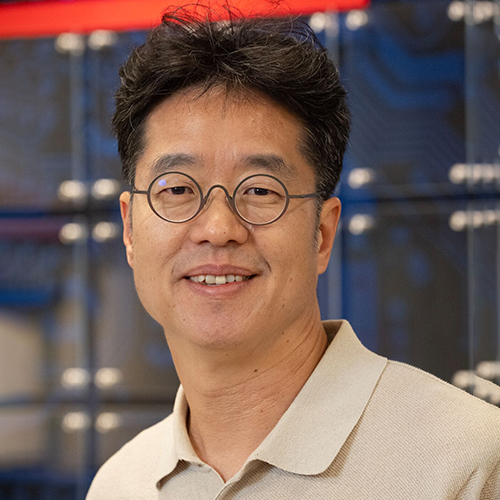 Associate Professor, Mechanical Engineering
Office: Heavy Engineering 222
Email Address: david.hwang@stonybrook.edu
Phone Number: (631) 632-8346
Lab Website: Laser Thermal Engineering Laboratory Website
Bio:
David Hwang joined the Mechanical Engineering Faculty at Stony Brook in 2011. His
research interests are on micro/nanoscale heat transfer, and laser-assisted processing
and diagnostics of materials of wide range application area including energy, semiconductor,
display, nuclear and biological fields. He served as the department undergraduate
program director in 2019 - 2024.
Education:
- University of California Berkeley, Mechanical Engineering, Ph.D. 2005
- Seoul National University, Mechanical Engineering, South Korea, M.S.E. 1997
- Seoul National University, Mechanical Engineering, South Korea, B.S.E. 1995
Professional Experience:
- Department of Mechanical Engineering, Stony Brook University, 2011- present
- Research Associate Scientist, Department of Mechanical Engineering, University of California Berkeley, 2008-2010
- Postdoctoral Research Fellow, Department of Mechanical Engineering, University of California Berkeley, 2005-2008
- Guest Scientist, Environmental Energy Technologies Division, Lawrence Berkeley National Laboratory, 2007-2010
- Researcher, Samsung Advanced Institute of Technology, South Korea, 1997-2000
Awards & Publications:
- Teachers Rated Excellent Educators by their Students, 2022 - 2024
- Journal of Thermal Spray Technology 25 Best Paper Honorable Mention, 2017
- Y. Zheng et. al., 2025, “Unveiling Mechanisms of Nano- and Picosecond Laser Scribing of Bilayer Molybdenum Thin Films on Flexible Polyimide for CuInxGa(1−x)Se2 Solar Photovoltaic Module Fabrication,” Solar RRL 9 (9), 2500091;
- Y. Jeong et. al., 2024, “Laser Scribing for Perovskite Solar Modules of Long‐Term Stability,” Sol. RRL, 8, 230104;
- S. Jeong et. al., 2023, “Enhanced Mechanical Stability of CIGS Solar Module with Glass/Polyimide/Indium Tin Oxide for Potentially Flexible Applications,”ACS Appl. Energy Mater. 6, 3745−3755;
- A. Jeong et. al., 2022, "Transparent back-junction control in Cu(In,Ga)Se2 absorber for high-efficiency, color-neutral, and semitransparent solar module," 30(7), 713-725, Progress in Photovoltaics.
For more publications, please visit David Hwang's Google Scholar page.
Professional Memberships & Service:
- Member of thermal science committee in the American Society of Thermal and Fluids Engineers
- Editor of Journal of Laser Micro/Nanoengineering
- Research Laser Safety Committee Stony Brook University
 Overview:
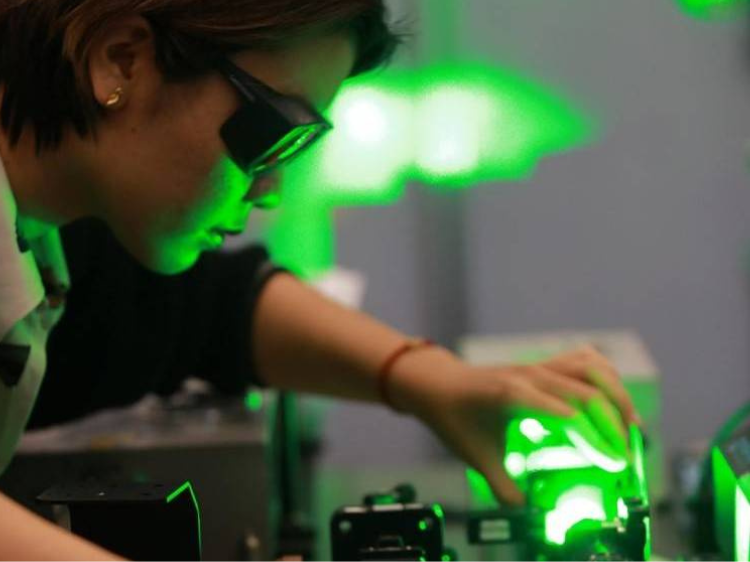
David Hwang’s research interests are on the micro- and nanoscale heat transfer, and laser-assisted processing and diagnostics of materials of wide range application area including energy, semiconductor, display, nuclear and biological fields. His technical expertise includes ultrafast time resolved diagnostics, optical near–field coupled with electron microscopes for in–situ monitoring of light–matters interaction, laser-based high heat flux material testing protocol, laser–assisted direct synthesis of semiconductor materials, laser-assisted semiconductor thin film densification, thin film solar cell manufacturing, chemical species analysis by laser induced breakdown spectroscopy, scalable nanomanufacturing, solar hydrogen production, and three–dimensional hybrid opto–fluidic device fabrication.
Highlights & Accomplishments:
- Optimized Laser-Assisted Flexible and See-through Thin Film Solar PV Manufacturing
- Developed Hybrid Additive Manufacturing Processes for Thermoelectric Generator (TEG), Thermal Super-Insulator and Oil-Water Separation
- Developed Laser-Assisted Defect-Free Chemical/Physical Vapor Deposition (CVD/PVD)
Coating Methods with In-Situ Process Monitoring
Research Areas:
Research Interests:
- Hybrid Laser-Spark Ignition Based Combustion
- Harsh Environment Compatible Composites/Electronics
- AI/ML Driven Laser Material Processing
News: