Research Facilities
The goal of having access to modern, state-of-the-art instrumentation is to enable the structural and chemical elucidation of a whole host of sample types including but not limited to inorganic, organic, and biological classes of crystalline and amorphous materials. Stony Brook is extremely well equipped to conduct such research with support for competitive instrumental capabilities in areas, including but not limited to diffraction, scattering, spectroscopy, and microscopy. These resources encompass both in-house and external characterization sources such as not only the Center for Functional Nanomaterials and the National Synchrotron Light Source-II located at Brookhaven National Laboratory but also the Advanced Photon Source situated at Argonne National Laboratory, where dedicated instruments are available for use.
|
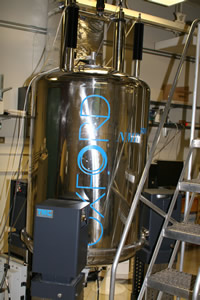
NMR Facility
The NMR Facility at Stony Brook University is housed in the basement of the |
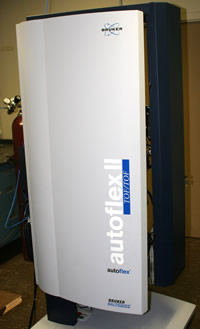
Mass Spectrometry Facilities
Our synthetic and biological programs are facilitated by state-of-the-art mass |
Single Crystal X-ray DiffractionThe Department of Chemistry houses a Single Crystal X-ray Diffractometer (SC-XRD) facility in Room 416, operated under the direction of Professor Quinton Bruch. The facility is equipped with a dual microfocus (Mo, Cu) Rigaku XtaLab Synergy-S with variable temperature capabilities. The facility is able to handle both small molecule and protein crystallography workflows as well as high-pressure DACs and a multi-well plate reader. Computational ResourcesRecently significant investments have been made to support the excellent and growing computational community at Stony Brook. The first is the installment of New York Blue, a $26 million dollar IBM Blue Gene supercomputer, developed under a cooperative agreement between Stony Brook and Brookhaven National Labs; it is designed to support collaborative climate science, computational chemistry, and physics. The second is the formation of the Laufer Center for Physical and Quantitative Biology, located in 15,000 square feet of newly renovated space; its research areas include molecular biophysics, synthetic biology, cell and systems biology, network biology, drug discovery, and neurobiology/neuroscience. The third is the creation of the Institute for Advanced Computational Science (IACS); its vision is to establish the University at the forefront of data and computing in science, engineering, the arts and humanities by advancing vibrant interdisciplinary research and education programs, not only providing broad leadership across SBU and SUNY but also delivering economic benefit to New York State. These recent developments enhance an already thriving community that had previously taken advantage of Seawulf, a campus-wide high-performance computing (HPC) cluster at Stony Brook University. It features over 400 nodes in addition to 23,000 cores, and delivers ~1.86 PFLOP/s of peak performance. It is utilized for intensive research, supporting a variety of hardware architectures and a comprehensive software module system. |
Other Facilities |